Why Social Comparison Hurts So Much (The Brain Science Behind It and 4 Tools That Help)
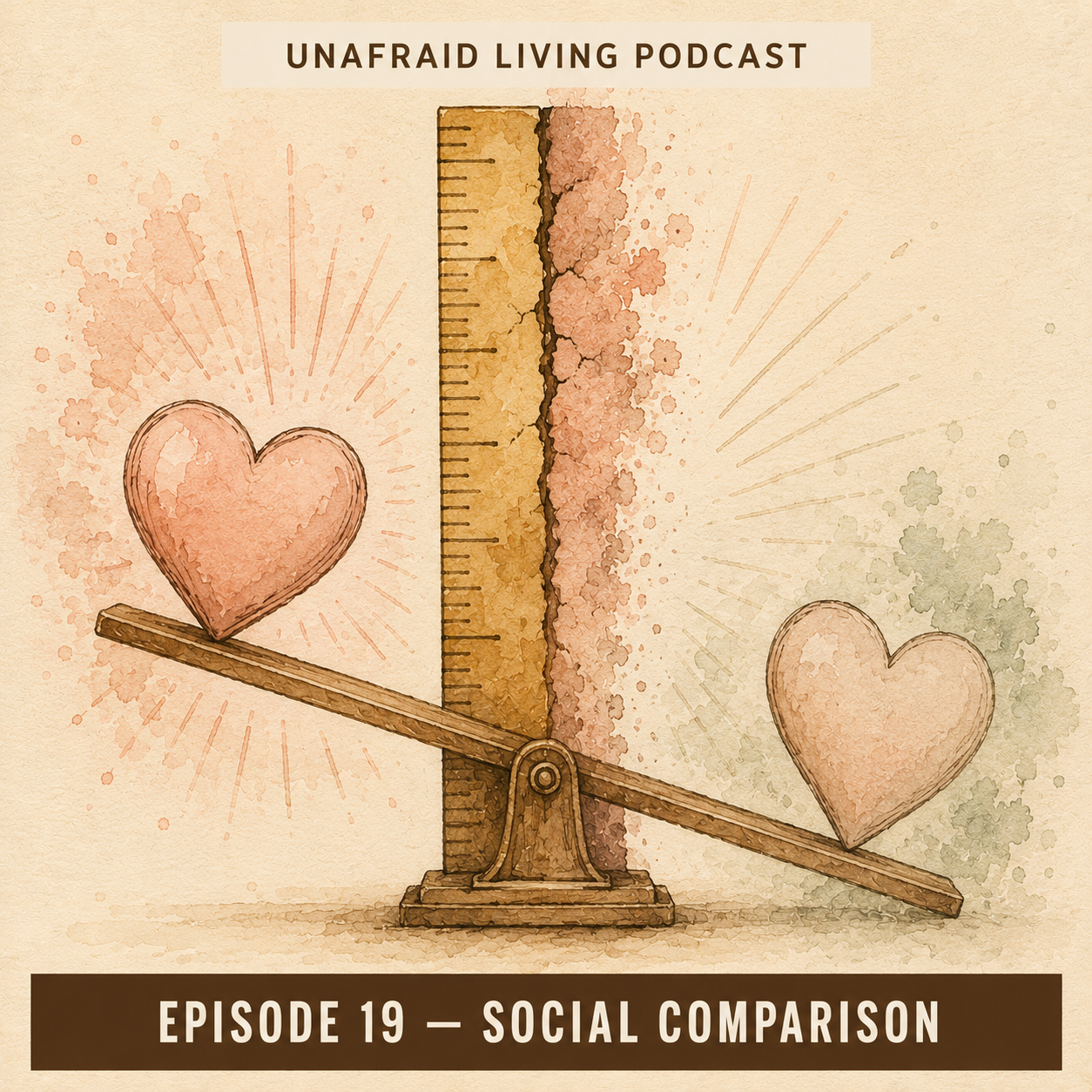
> Quick Answer: Social comparison hurts because your brain treats it as a genuine threat. The same neural regions involved in processing physical pain also become active during social rejection and comparison. This isn't a character flaw or just a social media problem. Your brain was designed to protect you, and one of the first things it does when it detects a potential threat is sound the alarm. The difference today is that our phones create thousands of opportunities for comparison every day, repeatedly triggering that alarm. To stop the spiral, work with your brain's wiring—not against it—by naming the loop, auditing your environment, getting curious about what comparison is trying to tell you, and reconnecting with people who make you feel safe.
The problem isn’t limited to young adults - it spans the generation. Comparison has crushed some of the most put-together, older people I've ever worked with. I'm talking about people who have the house, the career, the family — everything that should add up to happiness. And they're miserable. Not because they don't have enough. Because their brain won't stop measuring.
We know what it feel like — that moment when you put down your phone and feel gutted, and you can't even explain why — it's not rational, it's not fair, and willpower can't touch it. That's what Kim and I dug into in Episode 19 of the Unafraid Living podcast, and I think what we found will change the way you think about those moments.
In Episode 19 of the Unafraid Living podcast, Kim and I broke down the real neuroscience behind social comparison — why your brain does it, what it costs you, and what you can actually do about it.
Social Comparison Is Your Brain's Oldest Survival Tool
Why it matters: Understanding that comparison has biological roots—not just moral implications—is the first step toward changing your relationship with it.
Your brain has been scanning for social position since the beginning of human history. Where do I fit? Am I safe here? Do I belong? These aren't vain questions. For our ancestors, belonging often meant protection, shared resources, and survival. Being rejected by the group could have devastating consequences.
Your brain's comparison system runs automatically, quietly helping you understand the social world around you. It notices who is safe, who can be trusted, what behaviors fit the group, and whether something needs your attention. It's operating exactly the way it was designed.
Humans have always sought places of safety where they could finally relax. Whether it was a cave, a mud hut, a village, or the comfort of home, those places allowed the brain to turn down its vigilance. It didn't stop paying attention, but it no longer had to stay on high alert.
Today, many of us carry the outside world into those safe places with Instagram, Facebook and TikTok. Instead of giving our brains time to rest, we continuously feed it an endless stream of opinions to process and accomplishments, lifestyles, and carefully curated moments to compare. Our social comparison system rarely gets a break.
The problem isn't that your brain compares. The problem is that it can become overworked when it is constantly sees threats where none exist and stories that simply aren't true. Creating moments of real safety—setting down your phone, spending time with people who know and love you, enjoying peaceful places, and reconnecting with God—helps quiet the noise.
The Dopamine Loop: Why You Keep Scrolling
Why it matters: The scroll isn't harmless — your brain is caught in a seeking loop that keeps you coming back even when nothing good is there.
Here's something most people get wrong: the dopamine hit doesn't come from what you find. It comes from the looking. The anticipation. The checking. That's the reward your brain is chasing — the possibility that something good might be there.
This is why you can scroll for twenty minutes, see nothing that makes you feel good, and go back an hour later. Your brain is still waiting for the payoff but the little hit of dopamine the possibility brings, keeps us in the loop. It's the same with gambling. You plan the trip to the casino, a little dopamine hit. You put your hand on that lever — a little more and if you don’t win - the cycle repeats. And if you do win — the cycle repeats.
Your brain isn't chasing happiness nearly as much as it's chasing the possibility of happiness.
But here's what happens when comparison lands badly. Someone's highlight reel hits a tender spot, and your body releases cortisol — the stress hormone. They got it, I didn't. Your heart rate goes up. Your focus gets narrow. Your body is on high alert. And here's the part that matters most: your brain reacts the same way to a social threat as it does to a physical one.
Neuroscientist Naomi Eisenberger's research at UCLA showed that social rejection lights up the same brain regions as physical pain — specifically the dorsal anterior cingulate cortex and the anterior insula, the regions responsible for the distress component of physical pain ([Eisenberger, 2012, Nature Reviews Neuroscience](https://www.nature.com/articles/nrn3231)). The same ones. So when you're spiraling after seeing someone's post and you can't shake it all afternoon — your nervous system was running like it was a genuine emergency. It wasn't one. But it sure felt like it.
What Extreme Comparison Looks Like — Even Without Social Media
Why it matters: Comparison isn't caused by social media. A screen amplifies it, but the root is internal — and that means the solution is too.
I worked with a client — details changed to protect her — who had everything. Loyal husband. Wealth. Beauty. If you asked her, she'd say she had a sweet life. And she did. But she was one of the least happy people I've ever worked with.
Before any event — a wedding, a fundraiser, even visiting a new country club with a friend — she'd get terrified about what she was wearing. Not just uncertain. Terrified. But underneath it, the outfit wasn't really the issue. She wanted to fit in. She wanted to rank well.
She scanned every room she walked into. (We all do, but what we look for may vary.) She first noticed people who had less than her, and quietly looking down on them — not because she's a bad person (she has a heart of gold), but because it made her feel safe. Then she looked at people who had a little more, and felt crushed — every time. She had no one to fit in with and nowhere to belong. She was alone — in her own mind.
When the judgment stops feeling like clear sight, it starts feeling like a cage. She had been crushed by her own measuring stick — and it was aimed in every direction. Her kids, her friends, her wardrobe, her social circle. And here's the part that stopped me: she wasn't on social media at all.
If comparison can run someone into the ground with no phone in sight, this isn't an abnormal problem. It's something built into us — a need for emotional safety, not just physical safety. A screen that you're looking at constantly may amplify the problem. But the problem is internal.
Four Tools to Stop the Comparison Spiral
Tool 1: Name the Loop
The first step is recognizing what's happening in real time. When that gut-punch moment hits — whether it's on your phone or in a room full of people — name it. "My brain is doing that thing again." Ask yourself: What is it? What's happening right now? Is this real? Is this true?
Naming the loop works because it moves the experience from your reactive brain to your thinking brain. You're not trying to force a positive thought. You're just getting accurate about what's going on. And accuracy is where change starts. What should you name it? Whatever works for you but I like “Needless Comparison” because it feels freeing.
Tool 2: Audit the Environment
Your willpower is finite — it's something you have to learn. But your environment is adjustable. If something is constantly pulling cortisol responses, you get to decide whether you want to keep doing it.
Maybe you don't want to quit social media entirely — fine. But maybe you limit your time. Maybe you mute certain accounts. Maybe that weekly happy hour at the fancy spot is pulling too many triggers. This doesn't mean you don't like those people. It might mean they have different priorities than you do.
Remember: The goal isn't to never feel triggered. It's to stop overloading yourself when there is no need.
Tool 3: Get Curious About What Comparison Is Pointing To
Comparison tends to land hardest around the things we care about the most and feel most uncertain about. My client hired a wardrobe consultant — maybe not the ideal solution for brain training. But it gave her confidence and someone to talk through her specific insecurity with. The consultant helped reinforce what we were working on and it helped her rewire how she thought about herself and others.
You solution for brain training will likely be different! Maybe it's a life coach, maybe it's the Unafraid Course, or maybe it's a therapist if you have deeply rooted things like childhood trauma to work through.
The point is: comparison is a pointer, not a verdict. It's showing you where your values are getting challenged. When you start changing that, your whole pattern starts to shift.
Tool 4: The Connection Antidote
We were built for bonding. We were created for oxytocin — that's a relational hormone. And it counters cortisol directly. A longer hug. Sustained eye contact. Even a kind text — it doesn't have to be anything grand, it just has to be real.
My client had a full social calendar but no actual connection. She had proximity but not belonging. When you have connection — real connection — you get to stop performing and start belonging.
Your Practice This Week
This week, when comparison hits — on your phone, at a gathering, wherever it finds you — pause and notice what it's pointing to. What is it really about? Then notice what shifts in your nervous system and your thinking once you name it. You might be surprised. One step at a time creates steady progress and lasting change.
Download the Free Comparison Reset Worksheet
We made this for you — a one-page worksheet that walks you through all four tools from this episode. Print it out, keep it on your nightstand, pull it out the next time comparison hits. It'll help you name the loop, audit what's feeding it, get curious about what it's pointing to, and reconnect with the people who actually make you feel safe.
➡️ Download the Comparison Reset Worksheet (PDF)
Ready to Go Deeper?
The UNAFRAID course gives you the brain-based tools to stop the comparison spiral and start building emotional resilience — one small shift at a time.
Fearless Foundations ($97) at unafraidcourse.com
Take the free Fear Profile Quiz — it shows you exactly which fear pattern is running your brain:
Listen to Episode 19 wherever you get your podcasts.
Follow @unafraidliving on Instagram, TikTok, Facebook, and YouTube.
Explore More Episodes:
Episode 16: Does Grounding Actually Work?
Episode 17: Why Your Brain Replays Conversations at 3am
Episode 18: Why Other People's Good News Makes You Feel Bad
Frequently Asked Questions
Why does seeing someone else's success make me feel so bad?
Your brain treats social comparison as a threat — the same way it would respond to physical danger. When you see someone who seems to have more, your body releases cortisol, your heart rate increases, and your focus narrows. Neuroscientist Naomi Eisenberger's research found that social rejection activates the same brain regions as physical pain — the dorsal anterior cingulate cortex and anterior insula ([Eisenberger, 2012] (https://www.nature.com/articles/nrn3231)). So that gut-punch feeling when you see someone's highlight reel is a real, physical response. It's not weakness — it's biology.
Is social comparison caused by social media?
Social media amplifies comparison, but it doesn't cause it. Your brain has been scanning for social rank since the beginning of human history — it's a survival instinct. I've worked with clients who never use social media and still struggle with extreme comparison. A screen gives your brain more opportunities to compare, but the wiring was there long before the phone was. The real work is internal.
How do I stop comparing myself to other people?
The goal isn't to eliminate comparison — your brain will always scan. The goal is to stop the spiral before it takes over. Start by naming the loop: "My brain is doing that thing again." Then audit your environment to reduce unnecessary triggers. Get curious about what the comparison is pointing to — it usually lands on the things you care about most. And seek real connection, because oxytocin directly counters the cortisol that comparison produces.
What's the difference between jealousy and social comparison?
Jealousy is an emotion. Social comparison is a brain process — an automatic threat detection system that's been running in humans for thousands of years. The comparison comes first: your brain scans, detects a gap, and triggers a stress response. Jealousy, resentment, or that sinking feeling are what you experience as a result. Understanding the comparison mechanism underneath helps you respond differently rather than just managing the emotion on top.
Can social comparison ever be healthy?
Some comparison is natural and can even be motivating — it's part of how your brain learns and adapts. The problem starts when comparison becomes a loop you can't break, when it starts shaping how you see yourself and everyone around you, or when it triggers a stress response that follows you for hours. When that happens, comparison has stopped being a helpful signal and started being a cage. The tools in this episode help you tell the difference.