Why Other People's Good News Makes You Feel Bad (And What Your Brain Is Really Doing)
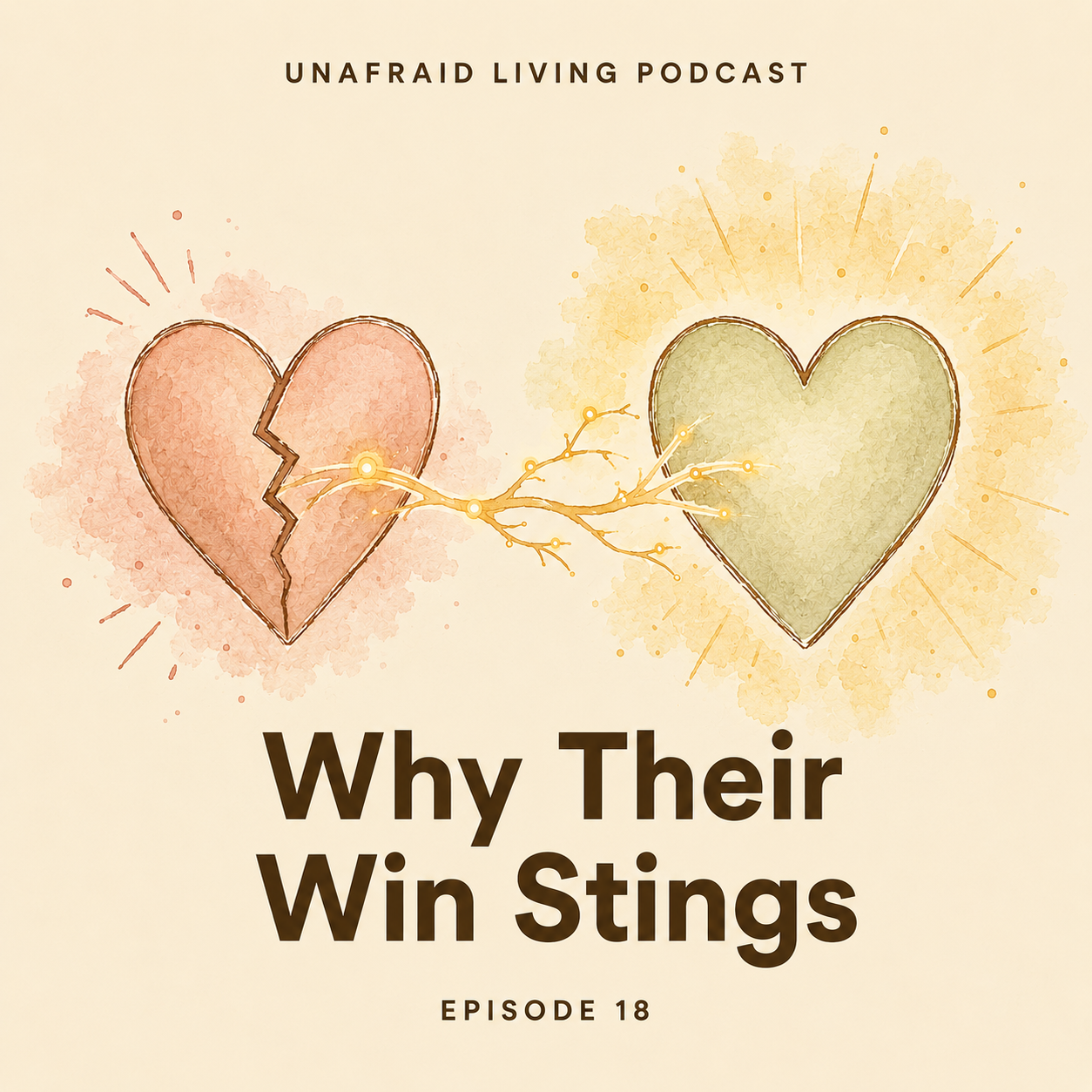
Quick Answer: When someone shares good news and you feel flat or stung instead of happy, that reaction is coming from your brain's threat detection system. Your amygdala runs a constant social comparison scan, and when it perceives someone else gaining status or resources, it fires a mild threat response called social comparison threat. This feels similar to sensing physical danger. The good news: this is a neural response you can retrain. Name the feeling, use the Quick Coherence Technique to shift into body-brain coherence, and choose an honest redirect thought. Your brain learns what you repeat — and genuine celebration is a skill your brain can build.
I've felt that sting. Someone shares something wonderful — a promotion, a new home, a dream that came true — and instead of the excitement I wanted to feel, there's this flatness. Maybe even a little burn. And then, almost immediately, the shame kicks in. Why can't I just be happy for them? What's wrong with me?
If you've been there, I want you to hear this clearly: you are. normal. Your brain is doing something it was literally designed to do. And you can train it to do something better.
In Episode 18 of the Unafraid Living podcast, Kim and I dug into this topic that most people avoid because it feels like an admission — why other people's good news can sting, and what's actually happening in your brain when it does.
Your Brain Is a Survival Machine (Unless You Train It Otherwise)
Why it matters: Understanding the biology behind the sting takes it out of the shame category and into the "I can work on this" category.
Your brain is wired to survive. That's its starting point — and unless you train it otherwise, that's where it stays. One of the things it does constantly, with or without your permission, is scan your environment to determine where you fit in. It's checking your social position against the people around you.
This isn't new. From the beginning of time, a person's social standing determined how they lived and how much protection they had. Your brain is your early warning system, and it monitors for threats — including social threats.
Here's the part that surprises most people: to your amygdala, the threat of losing social standing feels physiologically similar to the threat of physical danger. Research shows that when we perceive someone else has something we don't — status, achievement, resources — it can trigger a mild activation of the same circuitry that fires when we sense physical danger.
It's called social comparison threat. And it happens below the level of conscious thought.
The Sting Is Neural, Not Moral
Why it matters: Separating the initial reaction from your character gives you room to respond instead of spiral.
Your amygdala is your brain's threat detector. It doesn't ask for permission. It's not sitting there calculating "she got her promotion and I didn't, so I'm less valuable." It just fires. Like smelling smoke — you don't decide to notice it. Your body responds before your mind catches up.
That response might feel like a little sting, a little burn, or — and I think this is what most people experience — just flatness. Not anger, not visible resentment, just... hmm, great. And then here come the ANTs.
ANTs are automatic negative thoughts — a framework from Dr. Daniel Amen's work that has done a magnificent job of naming these patterns so we can fight back. When that initial sting hits, the ANT colony gets busy fast. Thoughts like: "I should be further along by now." "Why does everything come so easily to her?" "What's wrong with me?" And then the worst one: "I'm a terrible person for feeling this way."
Now you've added a second layer. First came the automatic response from the threat system. Then you started judging yourself for having it. That's where the shame spiral starts — negativity stacked on negativity, and those neural ruts just get deeper.
So let me say this clearly, and I want you to really hear it: the initial response does not have to lead to moral failure. It is a neural response. You are not your brain. You are not your first reaction. You can teach your brain new patterns.
Name It to Train It
Why it matters: The simple act of labeling what you feel activates the part of your brain that can override the threat response.
Step one is just to notice it and name it. You don't need to analyze it. You don't need to apologize for it or fix it in the moment. Just notice that it's there.
When you name what you're feeling, you engage your prefrontal cortex — the thinking, rational part of your brain — and you actually lower the activation in your amygdala. Research on affect labeling consistently shows that naming an emotion reduces its intensity. So just saying to yourself, "I'm feeling a little envious right now" — that actually helps, because you're acknowledging the feeling exists without letting it run the show.
Kim said it perfectly during our conversation: "Name it to train it." I love that.
Breathe Through It: The Quick Coherence Technique
Why it matters: Your body responds to breath before it responds to willpower. Calm the body first, and the brain follows.
This is where you lean into the tools. When your threat system fires, your heart rhythms become erratic. The Quick Coherence Technique — breathing in slowly and a little deeper than usual, several times, focused on your heart area — calms those rhythms down. And adding gratitude to the process helps your body and brain sync up so they begin operating in harmony. Watching a biofeedback monitor or EKG is fascinating — you can watch your emotions be graphed!
Purposefully slowing your breathing sends a signal to your brain that says: we're safe. It shifts you out of threat mode and into what's called coherence — when your heart and brain are working together rather than against each other. When you're in coherence, you think more clearly, you feel more emotionally stable, and you're much more capable of choosing your response rather than just reacting.
Coherence brings so much good that we could do a whole episode on it alone. But for today, just know this: it's the bridge between the automatic sting and the response you actually want to have.
Choose a Redirect Thought — A Positive, Honest One
Why it matters: The brain responds well to truth. Forced positivity backfires, but an honest redirect builds real neural change.
This step is where most people either skip ahead or get it wrong. Choosing a redirect thought is not toxic positivity. It's not pasting on "I'm so happy for her!" when deep down you're seething. That's gross, and your brain knows the difference.
Instead, choose something stabilizing. Something true. Here are some that work:
- "Her path doesn't diminish mine."
- "This is her time to shine. My time will come."
- "I want to be the kind of person who genuinely celebrates with others — and I'm working on it."
That last one is powerful because it acknowledges where you are now and where you want to be. You're not pretending. You're stating that it's hard and then choosing to move in the direction you want to go. Your brain responds so well to truth. When you're honest with yourself and choose a thought that is true and moving in the right direction, you are building the kind of neural patterns that will make your life easier.
The old wiring says: their win equals my loss. The new wiring says: their win is just their win, and I can celebrate with them. My path is my path. The more you choose that second thought, the more it becomes the default. You are training your brain for a new default.
This Isn't a Performance — It's Practice
Why it matters: The distinction between faking and practicing is the difference between masking and genuine transformation.
I want to be clear: what I'm describing is not putting on a mask. We're not training you to look happy for others so that you look good. We're training your brain to genuinely celebrate — even when there's a bit of a sting.
Anytime you do something new, something different, something that's not habitual, it feels hard. It might feel awkward. You might even wonder, "Am I faking this?" Check your motives — but if it's who you want to be, you're not faking. You just have to keep doing it with persistence, and it will become who you are.
The neural pathway of generosity gets stronger the more you give — of your time, of your attention, of your genuine celebration. One step at a time creates steady progress and lasting change.
And here's the ripple effect: if you're a parent with kids still at home, you're modeling these patterns. When you have positive, healthy thought patterns, you become the person people want to be around — the light, the attraction. Your kids see that. Your friends see that. Your coworkers see that. Change your own patterns, and the people around you benefit too.
Your Practice This Week
The next time you feel that sting — and you will, because you're human — try this three-step practice:
- Name it. Just say to yourself: "There's that sting." No analysis needed. You're activating your prefrontal cortex and calming your amygdala just by naming it.
- Breathe through it. A few rounds of heart-focused breathing — slow, deep, focused on your heart area. You're signaling to your brain that you're safe and shifting into coherence.
- Choose your next thought on purpose. Pick something honest: "Her path doesn't diminish mine" or "I'm working on being someone who celebrates with others." Not forced joy — just truth pointing in the right direction.
That's the practice. One moment at a time. It compounds.
➡️ Download the Free EMOTIONAL TRIGGER MAP
Ready to Go Deeper?
The UNAFRAID course gives you the brain-based tools to retrain your thought patterns and move from automatic reactions into genuine resilience — one small shift at a time.
Fearless Foundations ($97) at unafraidcourse.com
Take The Unafraid Profile — a free 3-minute quiz that reveals how fear and anxiety show up in your brain, plus practical tools to start rewiring the pattern.
Listen to Episode 18 wherever you get your podcasts.
Follow @unafraidliving on Instagram, TikTok, Facebook, and YouTube.
Explore Previous Series:
Unafraid Inside (Series 1 — Eps 1-9): The Virtue Effect
Say It Unafraid (Series 2 — Eps 10-15): Communication series
Frequently Asked Questions
Why do I feel jealous when my friend gets good news?
That reaction is just that — a reaction. It is your brain's social comparison system firing — not a reflection of your character. Your amygdala constantly scans your social environment to determine where you fit in, and when someone else gains something, it can register as a mild threat to your own standing. This happens automatically, below conscious thought. The feeling itself is biology. What you do with it next is where your character shows up.
Is it normal to feel bad when someone else succeeds?
Completely normal. Research on social comparison threat shows that perceiving someone else's gain can trigger the same neural circuitry as sensing physical danger. Everyone experiences this to some degree — it's baked into how human brains are wired for survival. The difference is whether you let the feeling run the show or learn to name it and redirect it.
How do I stop comparing myself to others?
You probably won't stop the initial comparison — your brain does that automatically. But you can train your response. Start by naming what you feel ("that's the comparison sting"), then use The Quick Coherence Technique to calm your nervous system, and choose an honest redirect thought like "her path doesn't diminish mine." The more you practice this pattern, the weaker the automatic comparison response becomes over time.
What are ANTs in brain science?
ANTs stands for Automatic Negative Thoughts, a framework from Dr. Daniel Amen. These are the uninvestigated, reflexive negative thoughts your brain generates — things like "I should be further along by now" or "what's wrong with me?" Everyone has them. The key is learning to notice them and challenge them with honest counter-thoughts instead of just believing them.
What is the Quick Coherence Technique and how does it help with difficult emotions?
Heart-focused breathing is a technique from HeartMath where you breathe slowly and a little deeper than usual while focusing your attention on your heart area. QCT takes it one step farther by adding gratitude. When your brain's threat system fires, your heart rhythms become erratic. This breathing pattern calms them down and shifts you into coherence — a state where your heart and brain work together instead of against each other. In coherence, you think more clearly, feel more stable, and can choose your response instead of just reacting.