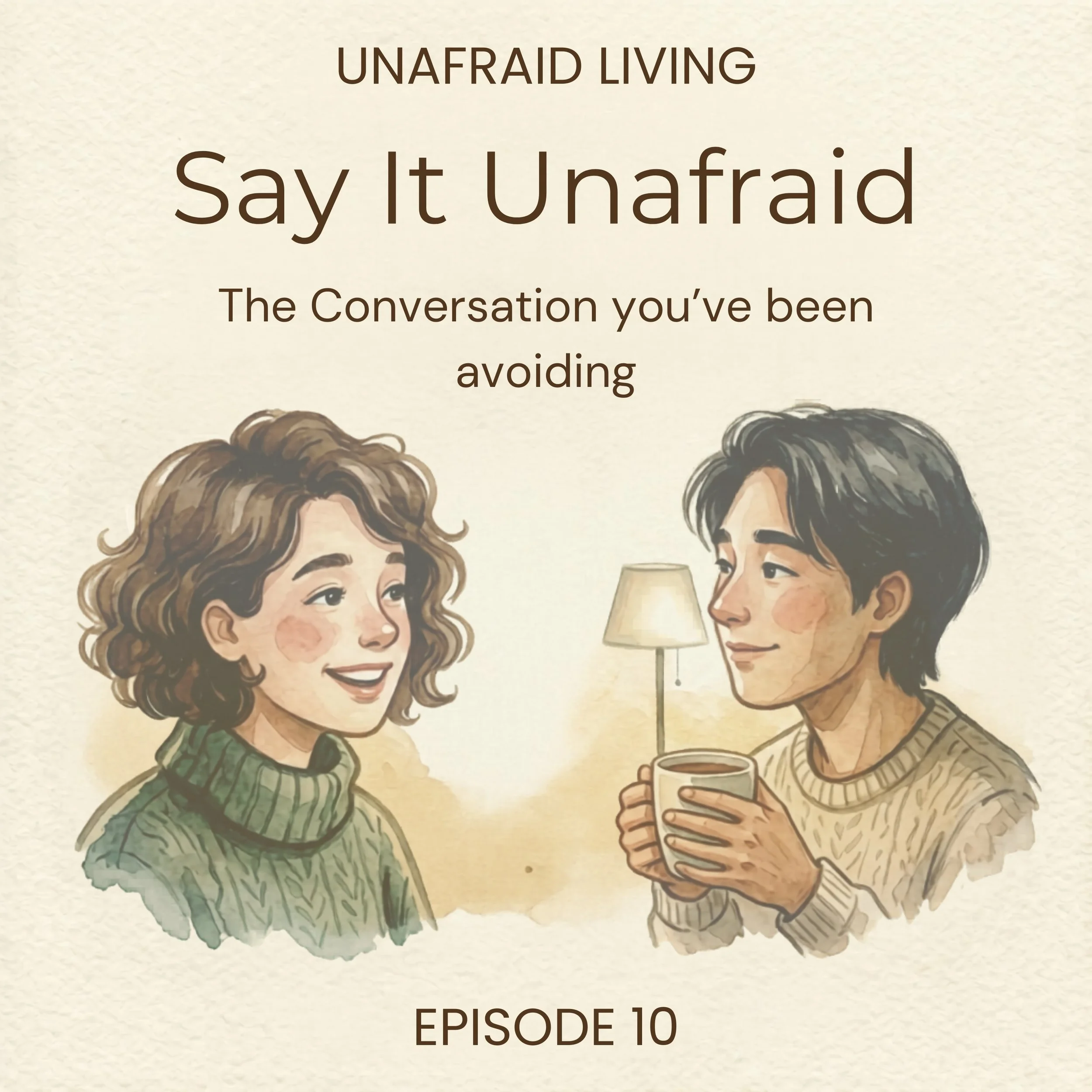
Say It Unafraid: The Conversation You've Been Avoiding
THE SHORT ANSWER
Hard conversations feel so difficult not because you don't know what to say — but because your brain interprets emotional risk the same way it interprets physical danger. When a conversation feels charged, your nervous system activates a threat response: your heart rate rises, your thinking gets foggy, and you either freeze, ramble, or avoid the conversation entirely.
The solution isn't finding the perfect words. It's learning to create safety — for yourself and the other person — so your brain can stay calm enough to communicate clearly. That starts with understanding the three levels of every conversation: the words, the story you're telling yourself about those words, and whether or not your body feels safe.
Why Hard Conversations Feel So Scary (And How to Have Them Anyway)
You’ve replayed it in your head a hundred times. You know what you want to say. You even practiced it in the shower. And then the moment comes — and you say nothing. Or everything comes out wrong.
Sound familiar? You’re not alone. And you’re not bad at communication.
In Episode 10 of the Unafraid Living podcast, Coach Suzette and Kim kick off a brand-new series — Say It Unafraid — all about the conversations we’ve been avoiding and what’s really going on in our brains when communication feels risky.
This is a shift from the Virtue Effect on the Brain series (Episodes 2–9), where we explored how virtues like discipline, self-control, and forgiveness literally reshape the brain. Now we’re applying those same brain health principles to something most of us struggle with every day: saying what we actually mean.
Why Does Communication Feel So Hard?
Here’s the truth: most of us don’t struggle with communication because we don’t know what to say. We struggle because we’re afraid of what saying it might cost us.
Being misunderstood. Being rejected. Starting a fight. Being seen as difficult, emotional, or needy. Disappointing someone.
So instead of saying what we mean, we soften it, hint at it, or avoid it altogether. And when it finally comes out — it usually doesn’t come out well.
Communication isn’t hard because of the words. It’s hard because relationships matter. And when relationships matter, our brains treat the conversation as high-stakes — even when it’s not.
What Happens in Your Brain During a Hard Conversation?
Your brain is constantly asking one question: Do I feel safe right now?
When a conversation feels emotionally charged, your brain doesn’t treat it as neutral. It treats it as a potential threat. Your nervous system activates. Your heart rate goes up. Your thinking gets cloudy. And you move into survival mode — fight, flight, freeze, or fawn.
This is especially true in close relationships. Your brain associates deep connection with safety and belonging, so when tension enters those relationships, it feels bigger, faster, and more personal.
That’s why a small disagreement with your partner or best friend can feel so disproportionately intense. It’s not because you’re overreacting. It’s because your brain is doing exactly what it’s designed to do — protecting you from a perceived threat.
And here’s a layer many people miss: emotions don’t actually start in the brain. They radiate from the heart. Your brain gets involved later with logic. But the initial emotional charge? That’s coming from your heart — which is why hard conversations feel so deeply personal.
What Happens When You Avoid the Conversation?
On the surface, avoidance looks like peace. You’re not arguing. Nobody’s upset. Everything seems fine.
But underneath, tension builds. Frustration. Resentment. Shutdown. And eventually — an emotional explosion, sarcasm, or passive-aggressive behavior that’s way worse than the original conversation would have been.
When we suppress our feelings to avoid conflict, we eventually move into more negative feelings toward the other person. The problem doesn’t go away. It just gets louder.
Suppressing hurt feelings and keeping quiet might feel safe in the moment, but it doesn’t build trust. And it doesn’t build the mental muscles you need to show up honestly in relationships.
What Does Healthy Communication Actually Look Like?
Healthy communication is honest and kind and clear — without being cruel. It’s calm without being silent. It’s not about winning or being right. And it’s definitely not going to be perfect.
The key: grace. Giving each other a break when words don’t come out right. Staying open-hearted and open-minded. Getting clarification instead of making assumptions. And being willing to be temporarily uncomfortable to achieve connection and understanding — even if you don’t end up agreeing.
Healthy communication doesn’t require agreement. It requires safety, honesty, and a willingness to stay in the room.
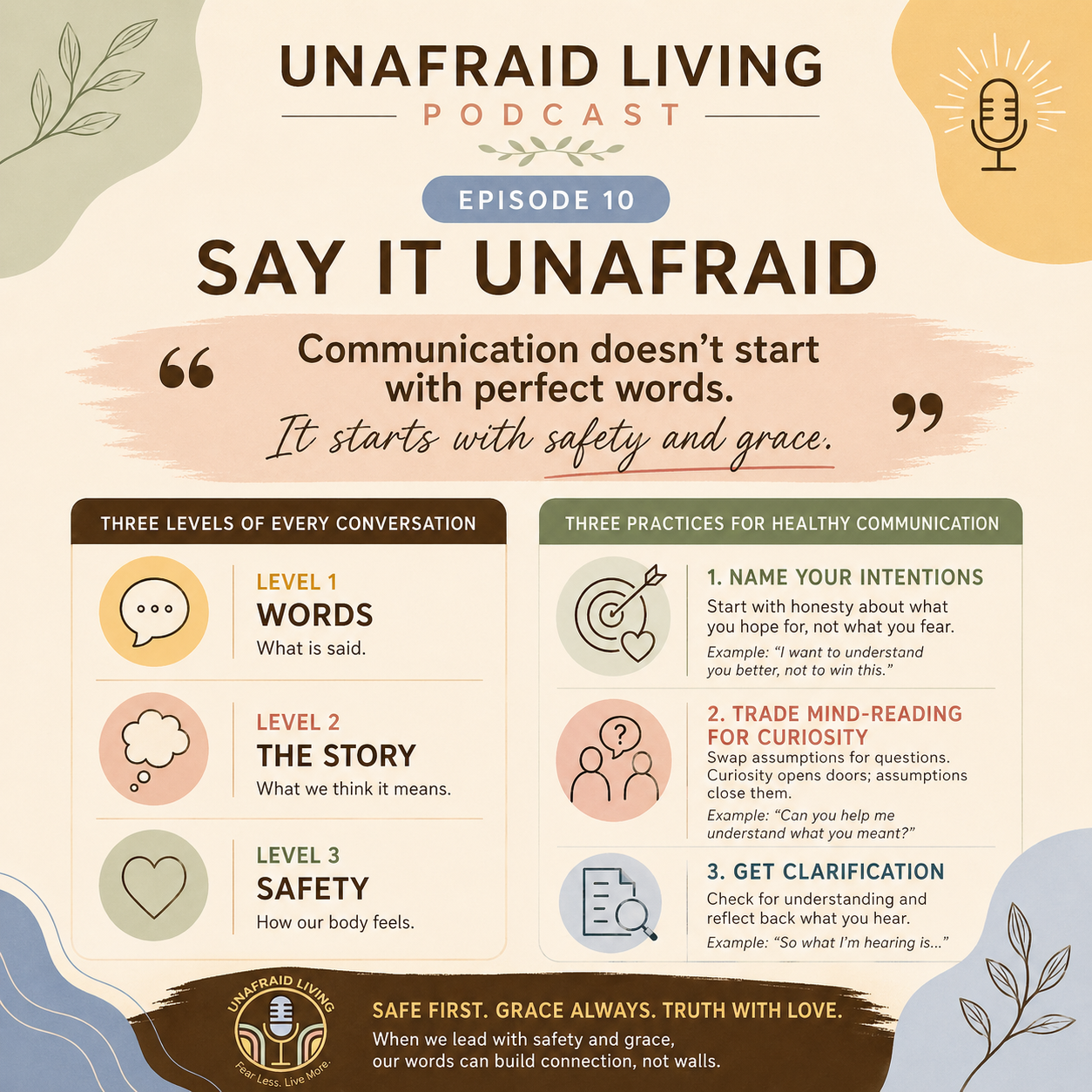
The Three Levels of Every Conversation
A framework to change how you think about every difficult conversation:
Level 1: The Words. What was actually said.
Level 2: The Story. What you think those words mean about you or the relationship. This is where things go sideways — because this level is usually driven by assumptions, not facts.
Level 3: Safety. Does your body feel calm, or does it feel threatened right now?
When communication breaks down, it’s usually not about the words. It’s about the story you’re telling yourself and whether your nervous system feels safe. Understanding these three levels gives you a powerful lens for diagnosing what’s really going wrong — and how to fix it.
Practical Tips for Having the Hard Conversation
Name Your Intention First
Before you say a word, name your intention — first in your own heart, then out loud. Something like: “I’m on your team, and we’re working toward the same goal.” Or: “My intention is to be heard and understood — even if we don’t agree. And I want to understand where you’re coming from, too.”
Naming your intention lowers defensiveness immediately. It tells the other person’s brain: we’re safe here.
Trade Mind Reading for Curiosity
So much miscommunication comes from assuming you know what someone meant. Instead of assuming, ask: “Can you help me understand what you meant by that?” or “What was your intention there? Because that really stung.”
Curiosity disarms conflict. It replaces the story in your head with the truth from theirs.
If You Freeze or Ramble, Name It
Two common reactions in hard conversations are freezing up or talking too much. Instead, just name what’s happening.
“I’m feeling nervous to say this, but it matters to me.”
“I’m noticing I’m shutting down. Can we pause and come back to this?”
When you’re rambling: “I’m brain-dumping. Let me lock in before I continue.”
One honest sentence can change the entire tone of a conversation.
A Note on Texting
Texting is where communication gets messy fastest. There’s no tone, no body language, no eye contact. People don’t edit their texts. And most of us read texts in the worst possible voice rather than the best.
Anytime we hear things or read texts that don’t sit right - get clarification. If a text stings, ask before you do any more reacting. And practice reading messages with grace — assume the best intent, not the worst. That’s a mental muscle, and it gets stronger the more you use it.
Your Step This Week
Take one brave step. If there’s a conversation you’ve been avoiding, you don’t have to have the whole conversation this week. Just name your intention — to yourself. Clarify what you actually want to say and why it matters.
And if a text or comment lands wrong, practice getting clarification before assuming the worst.
Your brain and your relationships will thank you.
Ready to Go Deeper?
If you’re realizing that fear has been running your conversations — keeping you quiet, people-pleasing, or exploding — the UNAFRAID course gives you the brain-based tools to change that pattern from the inside out.
👉 Start with Fearless Foundations — our self-paced course that helps you identify where fear is showing up and gives you practical tools to take back control.
Learn more at unafraidcourse.com
Take The Unafraid Profile — a free 3-minute quiz that reveals how fear and anxiety show up in your brain, plus practical tools to start rewiring the pattern.
Listen to the Full Episode
🎧 Episode 10: Say It Unafraid — The Conversation You’ve Been Avoiding
Available wherever you listen to podcasts.
Follow @unafraidliving on Instagram, TikTok, Facebook, and YouTube.
More From the Unafraid Living Podcast
This is the first episode in our Say It Unafraid communication series. If you’re new here, you might want to start with the Virtue Effect on the Brain series:
Episode 2: Integrity | Episode 3: Honesty | Episode 4: Graciousness | Episode 5: Discipline | Episode 6: Self-Control | Episode 7: Generosity | Episode 8: Forgiveness | Episode 9: Self-Mastery
Frequently Asked Questions
Why do hard conversations feel so scary?
Your brain treats emotionally charged conversations the same way it treats physical threats. When you anticipate conflict, rejection, or being misunderstood, your nervous system activates a stress response — making you freeze, ramble, or avoid the conversation entirely. This is especially intense in close relationships, where your brain ties connection to safety.
What are the three levels of communication?
Every conversation operates on three levels: Level 1 is the words (what was actually said), Level 2 is the story (what you think those words mean about you or the relationship), and Level 3 is safety (whether your body feels calm or threatened). Most communication breakdowns happen at Level 2 or Level 3, not Level 1.
How do I stop avoiding hard conversations?
Start by naming your intention — first to yourself, then out loud to the other person. Phrases like “I’m on your team” or “My intention is to understand, not to fight” lower defensiveness and create safety. You don’t need perfect words. You need honesty, grace, and the willingness to be temporarily uncomfortable.
How can I communicate better over text?
Texting removes tone, body language, and eye contact — which means messages are easily misread. Coach Suzette’s top advice: get clarification before reacting. If a text stings, ask what they meant instead of assuming the worst. Practice reading messages with good intent — it’s a mental muscle that gets stronger over time.
What is the Say It Unafraid series about?
Say It Unafraid is a multi-episode series on the Unafraid Living podcast focused on communication — why it feels so risky, how your brain processes hard conversations, and practical strategies for speaking up with clarity, kindness, and courage. Episode 10 is the first in the series.