Why You Get the Ick (And How to Know If It's Protecting You or Holding You Back)
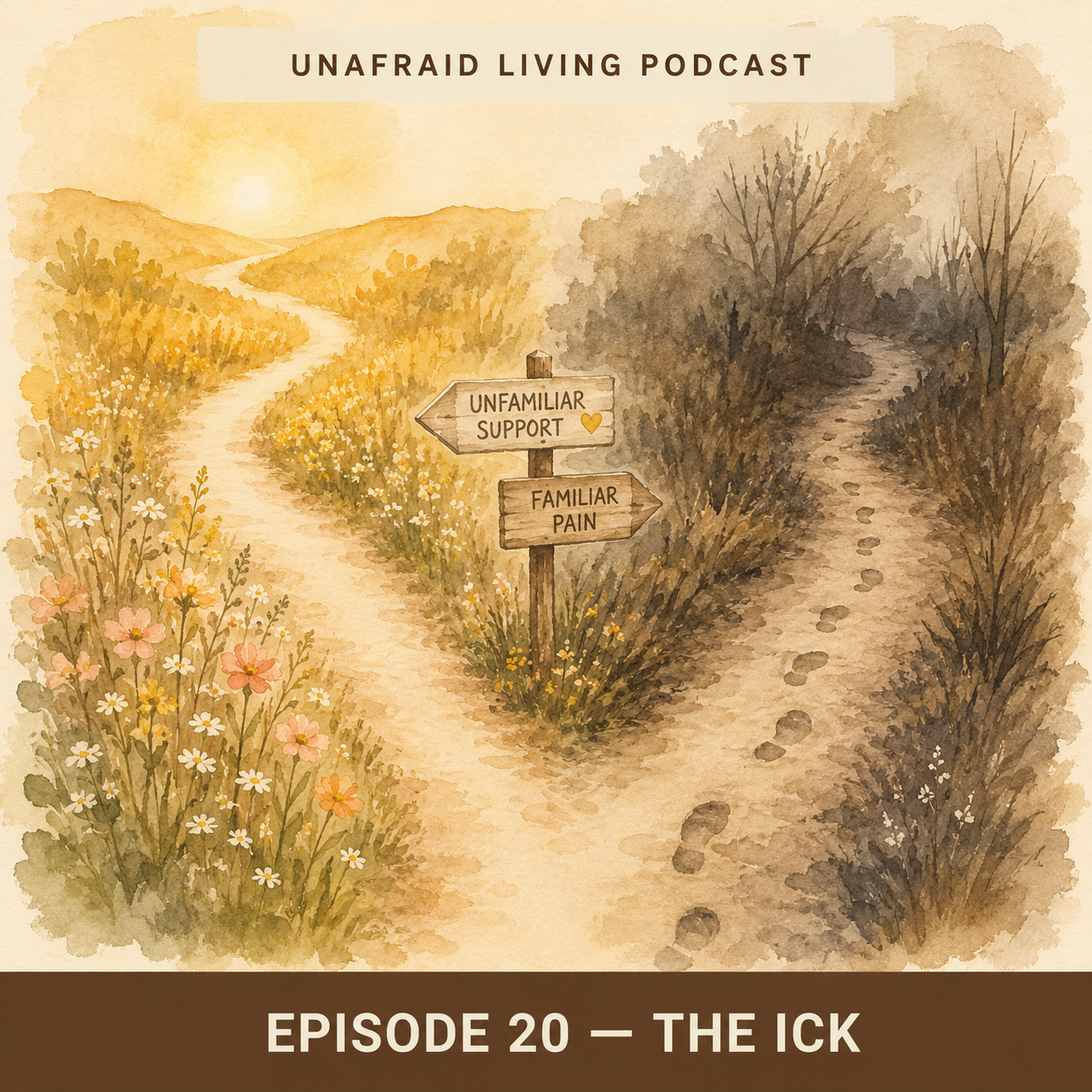
The ick is your brain's way of protecting you — but it doesn't always get it right. When that sudden wave of "no" washes over you, your brain's alarm system has already made a call before your thinking brain even had a chance to weigh in. Sometimes it's catching something real. Other times, it's an old pattern from your past replaying in a moment that doesn't actually call for it. Learning to tell the difference is one of the most important things you can do for your relationships.
Have you ever been really into someone — and then they did one tiny thing, and just like that, you were done?
Maybe it was the way they played with their dog, how loud they laugh, how they scratch their ears or pick at their nails. It can be anything that triggers you — when something just... shifts. We all laugh about it. The internet is full of ick content right now. But nobody ever really stops to ask: what is that? What's happening inside you when the whole body just slams on the brakes over something so small?
I've been there. Years ago there was a guy everyone though I should meet. But he made me cringe every time he took a bite. I didn't know there was a name for it back then — misophonia. I couldn’t stand how he chewed. He was a doctor, he was kind and had a wonderful family. And I could not get past the chewing. Looking back — it’s kind of funny. But in the moment? My body had already made the call before my brain ever got involved.
That's how fast the ick works. And that speed is actually the whole point.
In Episode 20 of the Unafraid Living Podcast, Kim and I dug into what the ick actually is in your brain, why it fires so fast, and — this is the part that really matters — how to know whether it's protecting you from something real or quietly pulling you away from something good.
What Is the Ick, Really?
Your brain has been running a protection system for as long as you've been alive. One of its oldest tools is disgust — that immediate, full-body pull-away response. Long before disgust had anything to do with dating or friendships, it kept people alive. Think about it: don't touch that, don't eat that, back away from that. It's a response that moves you away from something before you even have time to think about it, because sometimes thinking takes too long.
The ick is that same response. It's just pointed at a person now instead of something dangerous.
And here's what makes it tricky: your brain fires that response below your awareness. You don't sit down and decide to feel the ick. By the time you notice it, your nervous system has already made the call and handed you the result. That's why it feels so physical, so sudden, and so hard to argue with.
Underneath everything, your brain is always scanning and asking one question: am I safe? And sometimes the answer it gives you is no — and you get the ick. But "safe" doesn't always mean physically safe. Sometimes it means: am I emotionally safe here? And that changes the whole picture.
Why Does the Ick Happen So Fast?
I often call the amygdala your brain's alarm system. It reacts before your thinking brain — the prefrontal cortex, the part I think of as the CEO — has time to weigh in. That ick feeling is a snap judgment. Your body recoils, you pull back, and it all happens before you've had a single conscious thought about it.
That's by design. The amygdala's job is to scan your environment and keep you safe, and it does exactly what it was built to do.
But here's what I want you to hear, because I think this is the most important part: the ick is information. It's data your brain is handing you. It's worth paying attention to. But it is not always the truth.
Sometimes your gut is catching something real — something your thinking brain will confirm once it catches up. A genuine red flag. Other times, it's more like an old allergy alarm. When I was little, I was allergic to certain things, and as I grew up, I outgrew those allergies. But the alarm? It can still fire. The allergy is gone, but the alarm doesn't always know that yet.How Do You Tell a Red Flag from a Fear Flag?
How Do You Tell a Red Flag from a Fear Flag?
This is where it gets tricky, because both feel exactly the same in your body. That initial wave — the recoil, the cringe, the full-body "no thank you" — is identical whether it's a genuine warning or an old story replaying.
In my experience working with clients, here's what I've learned to look for. A red flag has a "because" that you can name once you slow down. The way the waiter talked to you. Something she said about her ex. A promise that didn't match the behavior. Something concrete and specific that your thinking brain can confirm.
A fear flag tends to show up right when things start getting good. When someone gets close. When they're genuinely kind. When they actually like you back. And I want you to know — this doesn't just happen in romance. It shows up in friendships, at work, anywhere closeness is involved.
If the ick keeps arriving the moment something feels safe, that's worth looking at. Because for some of us, our brain learned a long time ago that closeness came with a cost.
When Closeness Itself Feels Like a Threat
So much of what our subconscious does is tied back to childhood — unless we've gone through the work of building new patterns on purpose.
Think about it this way. Maybe in your family, getting tight in a circle of cousins meant teasing that poked a little too hard — not all in fun, but with a little too much truth in it.
Maybe you didn't know if mom would be up or down when you got home from school.
Maybe love felt like something you had to earn, and anything freely given felt suspicious.
Your brain builds pathways based on those early experiences. Every time something similar happens, that pathway gets a little deeper, and your brain reaches for the familiar one — because familiar is fast, and familiar feels safe. Even when it isn't.
So if distance was normal growing up — cold relationships, unpredictable emotions, having to perform for love — then steady, available, I'm-right-here love can feel completely foreign. Even though you know it's good, your brain gets scared and hands you the ick. And that ick might be pulling you back toward what your brain knows how to handle, even if what it knows how to handle hurts. It’s familiar and fits what you know.
This is something I've watched play out so many times in coaching. We were just talking on the podcast about how many women who grew up around narcissistic fathers end up in relationships with narcissistic men — because their brain knows how to navigate that terrain, even though it's painful. As I tell my clients: familiar pain is easier to deal with than unfamiliar support. And that's a pattern worth recognizing.
Research in attachment theory consistently shows that the attachment patterns we develop in childhood shape how we approach relationships as adults — including what feels safe and what triggers that pull-away response (Bowlby, Attachment and Loss, 1969).
The good news? Your brain was designed to adapt. Those pathways can be retrained. The more a thought repeats, the easier it becomes — but new thoughts take practice — lots of practice.
What Should You Do When the Ick Hits?
Before you make a call — before you pull away, end it, or write someone off — you've got to get yourself out of the reaction and back into your thinking brain. This is exactly what we talk about with pause and pivot.
Malcolm Gladwell wrote about this beautifully in Blink. He tells the story of an art expert who looked at what was supposed to be an ancient statue and instantly knew something was off. He couldn't explain why — he just knew. And he was right; it turned out to be a fake. That snap read was brilliant.
But Gladwell also tells story after story of people getting first impressions completely wrong. Same fast brain, completely different outcomes. And here's the part that really stuck with me: he says your fast read gets less reliable the more stressed and flooded you are (Gladwell, Blink, 2005).
So when everything feels heightened, the ick comes in strong, and you want to move away fast. That's the moment to slow down. Cool your system first. Then trust the read you get after you're calm.
Here's what that looks like in real life:
Name it. Out loud if you can, in your head if you need to. Something as simple as "I'm feeling the ick right now." That one sentence moves the whole experience from your alarm system to your thinking brain. You're giving your CEO a chance to look at the information.
Breathe. Heart-focused breathing — slow, deep breaths, a little slower and a little deeper than usual. You're settling your nervous system enough to take a real look at what's happening.
Ask yourself: is this a red flag or a fear flag? Give it a little time and watch what happens. Red flags don't disappear when you calm down — they actually get clearer. Fear flags tend to soften once your nervous system settles. That distinction alone can change how you handle relationships going forward.
Trust the answer. When you ask yourself — really ask — is this an old pattern or is this something real? — you're going to know. Move with trust, whichever direction your answer takes you. You might get corrected down the line, and that's okay. The point is that you're making the choice from your thinking brain instead of running on autopilot.
Your Practice This Week
This week, when the ick shows up — with a date, a friend, a coworker, wherever — try this: pause before you pull away. Name what you're feeling. Ask yourself, "Is this a red flag or a fear flag?" Then give your nervous system a chance to settle and take a second read. One choice at a time, you're training your brain to tell the difference. Micro discipline, macro change.
Download the Red Flag or Fear Flag Worksheet
We made this for you — a one-page worksheet that walks you through all four tools from this episode. Print it out, keep it on your nightstand, pull it out the next time comparison hits. It'll help you name the loop, audit what's feeding it, get curious about what it's pointing to, and reconnect with the people who actually make you feel safe.
➡️ Download the Red Flag or Fear Flag (PDF)
Ready to Go Deeper?
The UNAFRAID course gives you the brain-based tools to understand your patterns, calm your nervous system, and make decisions from your thinking brain instead of your alarm system — one small shift at a time.
Fearless Foundations ($97) at unafraidcourse.com
Start with the free Fear Profile Quiz — it helps you identify exactly what's driving your patterns:
unafraidliving.com/quiz
Listen to Episode 20 wherever you get your podcasts:
www.unafraidliving.com/podcast-blog
FAQ
Q: What does "the ick" actually mean?
A: The ick is that sudden, full-body feeling of being completely turned off by someone — often over something small, like the way they chew or a text they sent. In my experience, what's really happening is that your brain's alarm system is firing a protection response before your thinking brain has a chance to weigh in. It's rooted in the same pull-away instinct that keeps you away from things your brain reads as threats. The tricky part is that it fires with the same intensity whether the threat is real or just unfamiliar.
Q: Why do I suddenly lose attraction to someone for no reason?
A: When attraction disappears out of nowhere, it's worth asking whether your brain is responding to something real or running an old pattern. Your alarm system reacts faster than your conscious thoughts — and it fires the same response for genuine concerns and simple unfamiliarity. I've seen this so many times in coaching: if closeness felt unsafe in your past, your brain may hand you the ick the moment a relationship starts getting real. That doesn't necessarily mean something is wrong with the other person. It may mean your alarm system is doing protection work based on old experiences that don't apply anymore.
Q: How do I know if the ick is a real warning or just fear?
A: After years of working with clients on this, here's the simplest way I can put it: look for the "because." A real red flag has a specific, concrete reason you can name once you slow down — a broken promise, something that felt off, a pattern you can point to. A fear flag tends to arrive right when things start feeling safe or good. The best thing you can do is calm your nervous system first — slow breathing, a real pause — and then check again. Red flags get clearer when you're calm. Fear flags soften. That distinction alone is worth paying attention to.Q: Can childhood experiences cause the ick in adult relationships?
A: They absolutely can. Your brain builds pathways based on your earliest experiences, and every similar experience deepens those pathways. If closeness in childhood meant unpredictability, teasing that went too far, or emotional pain, your brain learned that getting close comes with a cost. So now, when someone gets close enough to actually matter, that old alarm fires and hands you the ick. It's your brain protecting you from something that already happened — in a moment that may not call for that same protection. Recognizing the pattern is the first step toward building a new one, and your brain was designed to adapt.
Q: How do I stop pushing people away when things get good?
A: Start with awareness — just noticing the pattern is a powerful first step. When you feel that pull-away impulse, pause before acting on it. Name what you're feeling, even just to yourself: "I'm feeling the ick right now." Then ask yourself: is this an old pattern or something real? Give your nervous system time to settle — breathe slowly, deeper than usual — and trust the answer you get when you're calm. One choice at a time, your brain builds a new pathway. With the right tools, lasting change is possible. That's what I've watched happen with so many of my clients, and it can happen for you too.
Follow @unafraidliving on Instagram, TikTok, Facebook, and YouTube.
Explore the Unafraid Podcast
Episode 14: How to Stay Calm During Difficult Conversations When Emotions Take Over
Episode 15: How to Repair a Conversation After It Goes Wrong (The Step Most People Skip)
Episode 16: Does Grounding Actually Work? The Brain Science Behind Earthing and Emotional Calm
Episode 17: Why Your Brain Replays Conversations at 3am (And a 3-Step Way to Stop the Loop)
Episode 18: Why Other People's Good News Makes You Feel Bad (And What Your Brain Is Really Doing)
Episode 19: Why Social Comparison Hurts So Much (The Brain Science Behind It and 4 Tools That Help)