Why You Feel Worse When You're Actually Getting Better (The Messy Middle of Changing Your Brain)
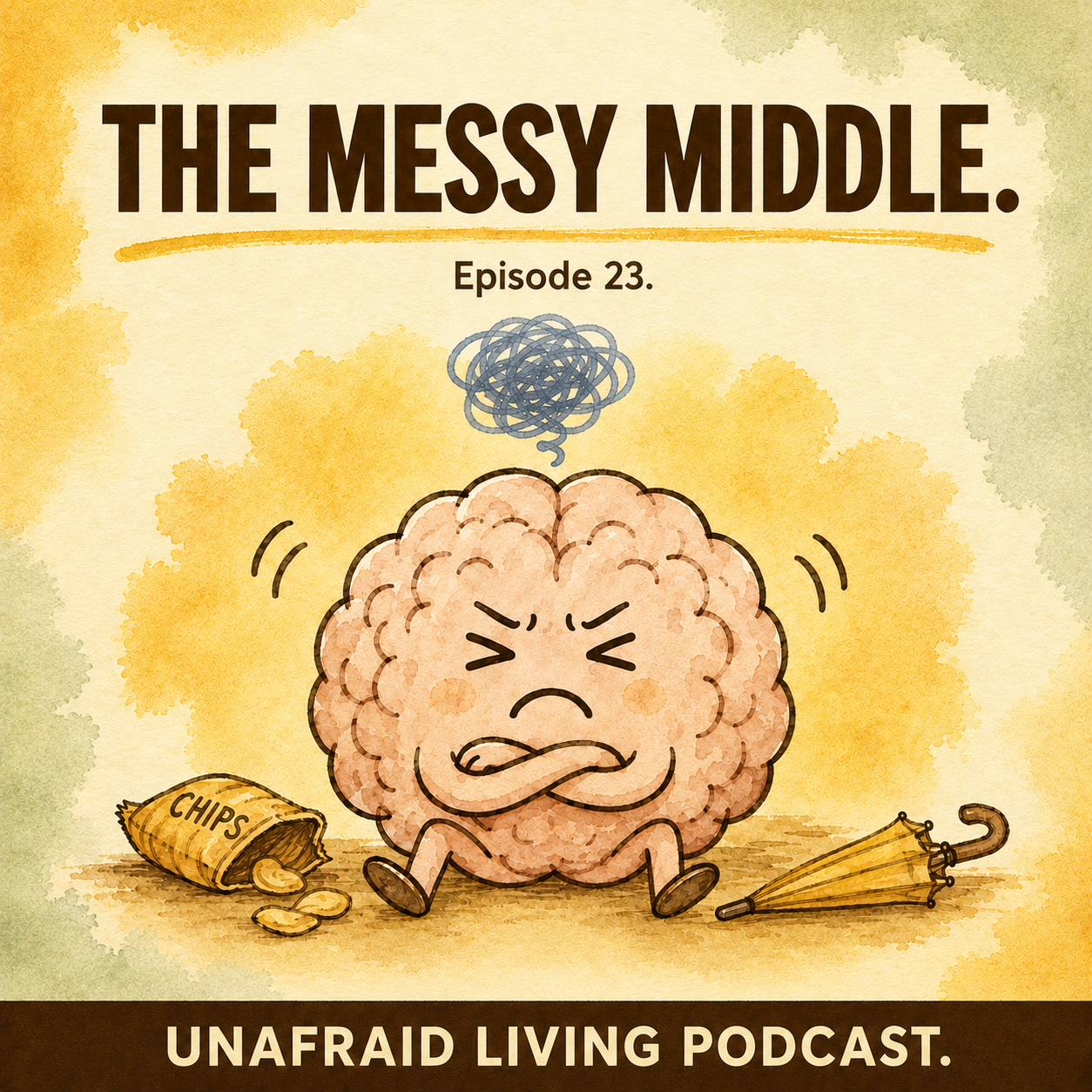
If you've started doing the work — new habits, new boundaries, new ways of thinking — and you suddenly feel worse, you are most likely in the messy middle of change. When an old pattern stops getting rewarded, your brain escalates it one last time before letting it go. Behavioral science calls that an extinction burst, and it's often a sign the rewiring is underway. Name what's happening, expect the surge, move your body, and keep going — the burst peaks, and then it drops.
I'll be honest with you about a season I don't love remembering. I had already done so much work on my brain. I'd learned about the Lyme a long time ago, so I changed my eating, my exercise, my cleaning products, my toothpaste, my makeup — everything that touched my body or that I consumed — everything that I could control — I tried to clean up. I mean, I’m still going paddleboarding, and if I fall in the dirty lake, I fall in. You can’t stop living. I had done a lot of work and made progress, but I can’t deny it, I knew my brain still wasn’t functioning up to par.
And then it was confirmed. Years later, the brain scan (part of my education) showed I probably had mold in my brain. More tests confirmed it. And I grieved! I shouldn’t have been surprised. Our dishwasher almost fell through the floor because we had a slow leak. And oh boy, did we have mold! I felt like I was going backwards. I wasn’t, I was just in the messy middle way longer that I thought was fair. And for a while, I just wanted to quit.
In Episode 23 of the Unafraid Living podcast, Kim and I dug into that exact stretch of the journey — the part nobody films — and the brain science that explains why feeling worse is so often part of getting better.
What Is the Messy Middle of Change?
The messy middle is the stretch where you're doing the right things and feeling all the wrong feelings. You've started the new habit, set the boundary, cleaned up the diet — and now you're crying in the grocery store, snapping at your kids, and wondering what's wrong with you. (We've probably all had at least one of those grocery store moments. What varies is the aisle.)
Here's what's actually happening: you're seeing your patterns clearly for the first time. The habits that kept you stuck used to run in the background. Now you notice them, and noticing them can make you mad at yourself. That anger reads as failure, but the seeing itself is movement. In my experience coaching people through change, the ones who feel like they're going backwards are very often the ones who have finally turned around to face forward. Cleaning out a closet looks like a disaster in the middle. The mess means you've started.
Why Do You Feel Worse Right When You Start Doing Better?
Your brain optimizes for predictability. It runs on pattern recognition, and everything you repeat reinforces the pathway you repeated. Picture a truck driving across a muddy field. The first pass leaves a faint track. A hundred passes leave ruts so deep the truck steers itself. Your brain builds its patterns the same way — good or bad, the more you travel a path, the deeper it gets.
So when you choose a new path, nothing steers itself anymore. It takes effort to stay on the new path and it might be a little uncomfortable. Discomfort is what brain training feels like from the inside. The old rut is still right there, smooth and familiar, and familiar has a gravity all its own — it pulls hardest right before you break away from it.
Why Do People Push Back When You Start to Grow?
This one surprises people: sometimes the resistance comes from the people who love you. You start eating differently, exercising more, guarding your time, and suddenly you hear "you don’t need to do all that" or "you're killing yourself", "we liked you fine before."
That might be about their own fear of you growing away from them. But most of the time it's subconscious. They simply like you. They're used to you. Maybe you're busier now and their feelings are a little hurt, so they tug you back toward the version of you they know. It helps to expect this instead of being wounded by what seem like discourging words. Their nervous systems are doing the same thing yours is — wanting the familiar.
What Is an Extinction Burst?
Behavioral science has a name for the worst stretch of the messy middle, and I find that naming it takes much of its power away. It's called an extinction burst: when a behavior that used to be rewarded stops getting rewarded, it escalates before it fades.
Picture a little one in a grocery store who wants the popsicle right now. The answer is no — so the asking gets louder, more desperate, more dramatic. That's the burst. Your brain does the same thing when you retire an old pattern. Quit sugar, and the cravings spike just as someone strolls by with an ice cream cone. Decide to finally speak up in the group that respects you, and your mind gets louder: you'll sound stupid, nobody's going to listen. Kim put it perfectly on the episode: your brain is throwing a fit — one last fit to see if it can get what it wants.
Why Does Giving In Make the Next Burst Stronger?
Any parent knows what happens when the tantrum gets the popsicle: the next tantrum comes faster and louder, because escalating worked. Your brain learns exactly the same lesson. Give in mid-burst, and you've taught your brain that if it just yells long enough, you'll turn the truck back into the old rut. The next burst will be harder to ride out — and if you've spent years giving in, the early bursts will be loud.
One caution from the episode: watch your language. "I'll NEVER eat sugar again" is the kind of absolute that invites a rebellion. So is biting off more change than you have capacity for right now. Change a little at a time, over and over, until the new thing becomes normal — then add the next thing. Real change takes real effort, and effort spends better in small denominations.
Why Do You Feel Guilty When You Hold a Boundary?
Kim and I talked about a real one from our own working life. My boundary is that we meet after 10:30am. Once in a while she'll ask for 10:00, and once in a while that's fine — but if it happened a lot, I’d probably start to feel guilty in both directions: guilty for saying no or guilty for letting my own boundary slide.
Here's what I've learned to do. The guilt that shows up around a new boundary is a signal, and a signal is just information. It's your nervous system saying this is unfamiliar territory — pay attention here. You get to decide what happens next. And a boundary carved in stone can do a number on your relationships; a boundary held with flexibility protects you and the relationship at the same time. It's your boundary . You're allowed to flex it on purpose, and that's different from abandoning it mid-burst.
How Do You Keep Going When Growth Feels Like Failing?
Four tools carried this episode, and I've watched every one of them work with clients.
Name it. Say "this is the messy middle" or "this is an extinction burst" — whichever you'll remember. Naming engages your prefrontal cortex, the thinking part of your brain, and puts you back in the driver's seat instead of the passenger seat of the emotion.
Expect the surge. You know the burst is coming, so plan for it like weather. You don't cancel your life because it's going to rain. You bring an umbrella.
Regulate your body, and match the mood. Feelings live in your body, so move your body. Angry? Try an angry dance or jump it out. Frustrated? Move hard for a minute. In my own meditation I talk my body through relaxing one part at a time — neck, shoulders, chest, arms. When you tell your body what to do, it listens.
Find support that shares your core values. A friend, a counselor, a coach — someone who will remind you "you're in the messy middle, keep going" instead of cheering while you quit. Trying to do this alone is the hardest possible version of it.
And when the automatic negative thoughts swarm in — those ANTs that eat away at you like termites in a house — take them on one at a time. You're never fighting a monster. You're negotiating with one ANT at a time.
What's Waiting on the Other Side?
The burst peaks, and then it drops. The new pathway strengthens each time you hold steady, and one day you notice the old pattern simply isn't haunting you anymore. The new pattern is your new normal.
That's how my own story turned, too. Once I got past the grief about the mold, I realized the mold had been there all along — the discovery was just new information. And all that detoxing I thought was wasted? It's probably what protected my mind while the mold was doing its worst. The work you do in the messy middle counts, even on the days it feels like it's counting against you. Most people quit a few steps before the ground levels out. Keep walking.
## Your Practice This Week
Just notice. That's the whole assignment. When the discomfort of growth shows up this week — the craving spike, the boundary guilt, the "let's just quit" chorus — name what you're feeling, breathe through it, match your body to the emotion, and keep going. You don't have to fix anything. And if you've set a boundary, remember it's yours; it's okay to be flexible with it on purpose.
Download the free printable Messy Middle practice worksheet to track what you notice this week — one page, no email required: ➡️The Messy Middle
Ready to Go Deeper?
The UNAFRAID course gives you the brain-based tools to keep going through the messy middle of change — one small shift at a time.
Fearless Foundations ($97) at unafraidcourse.com
Start with the free Fear Profile Quiz — it helps you identify exactly what's driving your patterns:
Frequently Asked Questions
Why do I feel worse when I start working on myself?
Because working on yourself means seeing your patterns clearly for the first time, and that seeing is uncomfortable. On top of that, when you stop feeding an old habit, your brain escalates the urge one last time before letting it go — an extinction burst. Both of those feel like failure while they're happening, and both are common features of real change. This stretch is where the deepest rewiring happens, which is exactly why it feels so hard.
What is an extinction burst in simple terms?
An extinction burst is the surge that happens when a behavior that used to be rewarded stops being rewarded — the behavior gets louder before it fades. Think of a little kid told no to a popsicle: the asking escalates into a fit before it stops. Your brain does the same thing with sugar cravings, scrolling urges, and old habits of staying quiet. The burst peaks, and then it drops, as long as you hold steady through it.
How long does the messy middle of change last?
There's no fixed timeline, and I'd be careful with anyone who promises one. It depends on how long the old pattern has been practiced, how much you're changing at once, and your capacity in this season of life. What the science does show, is that bursts peak and then drop, and each time you hold steady through one, the new pathway strengthens. Changing one or two things at a time, instead of everything at once, usually shortens the mess considerably.
Why do I feel guilty when I set a boundary?
Boundary guilt is your nervous system flagging unfamiliar territory — you're standing somewhere you've never stood before, and it feels strange there. The guilt is a signal to pay attention, and you get to decide what happens next. A boundary also works better held with some flexibility: bending it on purpose for someone you love is different from abandoning it because the guilt got loud. With practice, holding the boundary starts to feel like protecting the relationship, because it is.
How do I stop giving in when my brain is throwing a fit?
Four things help. Name what's happening ("this is an extinction burst" or simply "this is the messy middle") — naming engages your thinking brain and puts you back in charge. Expect the surge in advance, the way you'd bring an umbrella into rain. Move your body in a way that matches the emotion — an angry dance, a hard walk, a slow rock. And keep at least one support person nearby who shares your core values and will tell you to keep going. Avoid absolute vows like "never again," which invite the rebellion.