What Is Self-Mastery? How Mastering Your Emotions Builds Confidence and Reduces Fear
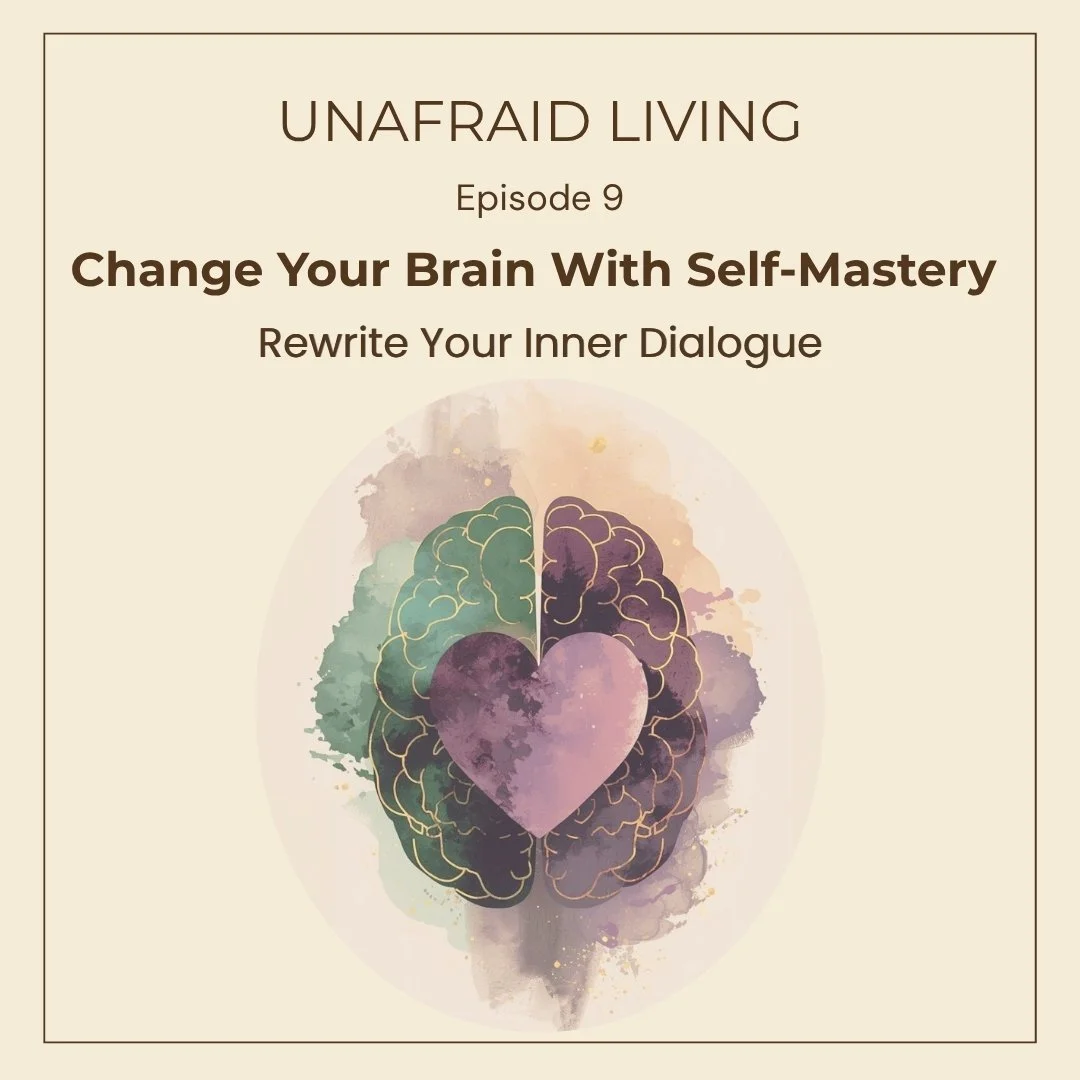
What is Self Mastery?
Quick Answer: Self-mastery is the ability to manage your emotions and desires, especially in difficult or tempting situations.
By choosing the outcome you actually want instead of reacting in the moment, you strengthen the neural pathways that support confidence, clarity, and resilience. At its core, self-mastery is an act of self-love: doing the hard thing now to get the life you want later. The starting tools are a pause, heart-focused breathing, and an honest conversation with yourself about what you really want.
You know that moment when you’re about to say something you’ll regret, or grab the thing you told yourself you wouldn’t, or procrastinate on the one thing that would actually move you forward? And you can feel yourself choosing the wrong thing while you’re choosing it?
That’s when self-mastery shines.
If you've been following this series from the beginning — through integrity, honesty, graciousness, discipline, self-control, generosity, and forgiveness — self-mastery is where it all comes together.
How Self-Mastery Changes Your Brain
Self-mastery isn’t just a character trait. It produces measurable changes in brain function — changes that make confidence and clarity easier to access over time.
You are not your brain. You can teach it new patterns.
Self-mastery strengthens the neural pathways that support conflict resolution, decision-making, and emotional regulation. When self-mastery wins, you feel improvement across the board - with mental fitness and emotional stability.
Here’s one of the biggest shifts you’ll want to make: conflict doesn’t have to mean confrontation. Language matters — it changes how the brain processes the whole situation. When you think of a hard conversation as just a conversation, or even a hard conversation, instead of a confrontation, the emotional charge drops. Your brain can actually engage instead of just reacting.
This applies to conversations with other people, but it also applies to conversations with yourself. When you’re tempted to eat the thing you said you wouldn’t, or procrastinate on the thing that matters — instead of beating yourself up, you’re just having a talk - with yourself. You’re recalling why you don’t want the effects of that choice.
What Happens When Self-Mastery Slips?
Understanding what regression looks like helps you recognize it early — before it becomes a rut.
When the brain falls back into old habits, emotional reactivity increases and clarity decreases. Giving into immediate gratification — the snack, the scroll, the sharp word — feels accidental. Nobody means to procrastinate. Nobody wants to stay stuck. But without self-mastery, you end up staying in it and not getting to the other side, where confidence and clarity live.
Let’s be real, everyone has off days. A bad day or even a rough week doesn’t necessarily mean you’ve lost progress. But when you stay in a place of regression — when it becomes the norm — stop trusting yourself which means your confidence drops, and internal friction increases. It spills into relationships. You stop being the person you were. Over time, this reinforces what we call neural ruts — deep grooves of fear, anger, avoidance, and low confidence that become harder and harder to climb out of.
The good news: those ruts don’t have to be permanent. The more a new thought repeats, the easier it becomes. New patterns take practice, but the brain is always changing and you are in charge of the shape it takes.
How to Start Building Self-Mastery
Self-mastery sounds ominous, but it starts with one small moment of noticing. Here’s what to do in that moment.
That’s right, just start noticing. Notice when you’re about to make a decision that will keep you stuck. You’re about to procrastinate. You’re about to grab the jumbo size bag of chips. You’re about to say something that doesn’t need to be said.
When you catch yourself, in that moment, take a pause. Not a quick one — sometimes you need a longer pause than feels comfortable, because the short pause doesn’t give you time to think about the bigger outcome. Sit with it. Then ask yourself: what’s the outcome I actually want here?
That single question — asked honestly, in a calm internal conversation rather than a confrontation with yourself — is self-mastery in action. It’s not about being perfect. It’s about being mindful of who you are. And making one choice that’s aligned with what you actually want.
Let’s clarify. What exactly is self matery?
Self-mastery sounds intimidating until you understand what it actually means. It’s simpler than you think — and it’s deeply personal.
Self-mastery is the ability to manage your emotions and desires, especially in difficult situations, so they work for you instead of against you. It’s easy when things are going smoothly. The real work happens when things are not.
At its core, self-mastery is an act of self-love. Not the bubble-bath, Instagram kind. The kind that builds confidence and hope by doing the hard thing in the moment to get what you actually want later.
Self Mastery in Action
Here’s a story from my own life. It was a proud moment. I was negotiating a car purchase alone but sticking to the price my husband and I agreed on. I wanted that car! And it was still a good deal, even at $500 above our agreed upon budget. But I walked - because I said I would - not because I wanted to.
The dealer called back that evening telling me he had changed his mind and would take my final offer. That moment!! What a great feeling. I was so glad I had stuck to my guns. I was proud of myself and of course thrilled to get the car at the right price!
Heart-Focused Breathing:
Your Tool for the Pause
Why it matters: When emotions are running high, you need a concrete tool to calm the brain down before you can think clearly. This is that tool.
When emotions go chaotic, the brain follows. Heart-focused breathing is a tool that brings them into alignment. You just need to pause and pivot. Slow, deep breaths, focusing on the area of the heart. A little slower and a little deeper than usual. Three to five breaths is often enough.
What does this do? When we slow down and breathe, the brain gets clearer signals. Instead of firing off in a million directions, it calms down enough for you to think. And once you’re calm, the conversation you have with yourself changes. You stop fighting yourself and start asking: what do I actually want here?
Heart-focused breathing pairs directly with the pause-and-pivot method from Episode 6. The breathing is the pause. The honest self-conversation is the pivot.
Self-Mastery Is Self-Love
Reframing self-mastery as love — not restriction — changes how your brain receives the whole concept.
When we realise that self-mastery is a beautiful gift of love that you give yourself, it makes it a little easier, because we remember - it leads us to getting what we really want.
When you choose not to yell at someone, when you stop the internal yelling, when you choose a kind intentional conversation instead of a confrontation — with someone else or with yourself — everything changes. Your neural wiring improves. Confidence builds. Clarity returns.
And here’s the line to remember: you are not ruled by your brain. You rule your brain. Most people don’t understand that or believe it, but it’s how neuroplasticity works. You may not feel in control right now — but feelings change. And when you take hold of that truth, you start getting what you actually want out of life.
Your Step This Week
The next time you’re about to make a choice that won’t move you forward — the chips, the sharp words, the scroll, the procrastination — pause. Take three heart-focused breaths. Then ask yourself: what’s the outcome I actually want?
That’s self-mastery. One choice at a time. Real change takes real effort — but your brain is built for this.
➡️ Download the Free VALUES CLARIFIER
Frequently Asked Questions
What is self-mastery?
Self-mastery is the ability to manage your emotions and desires, especially in difficult situations, so they work for you instead of against you. It’s choosing the outcome you actually want rather than reacting in the moment. At its core, it’s an act of self-love that builds confidence and resilience.
How does self-mastery change your brain?
Self-mastery strengthens the neural pathways that support conflict resolution, decision-making, and emotional regulation. With practice, confidence and clarity become easier to access because your brain has built the pathways for them. Without self-mastery, the brain falls into neural ruts of reactivity, avoidance, and low confidence.
What is the difference between self-mastery and self-control?
Self-control is the ability to pause before reacting. Self-mastery builds on self-control by adding intentional decision-making aligned with your core values. Self-control is the pause. Self-mastery is the pause plus the pivot, or, the wise choice that follows it.
What is heart-focused breathing?
Heart-focused breathing is a calming technique where you take slow, deep breaths while focusing your attention on the area of the heart. Three to five breaths is often enough to calm the brain and create space for clear thinking. It pairs with the pause-and-pivot method from Episode 6.
How do I start building self-mastery?
Start by noticing the moments when you’re about to make a choice that won’t move you forward. Take a pause — longer than feels comfortable. Use heart-focused breathing to calm your brain, then ask yourself what outcome you actually want. That honest self-conversation, repeated over time, builds the neural pathways for lasting confidence.
Want to Go Deeper?
The Fearless Foundations course gives you the brain-based tools to break free from fear, anxiety, and negative thought loops — at your own pace. 6 modules. 30 lessons. $97.
Start now at unafraidcourse.com
Not Sure Where to Start?
Take The Unafraid Profile — a free 3-minute quiz that reveals how fear and anxiety show up in your brain, plus practical tools to start rewiring the pattern.
Take the Quiz → unafraidliving.com/quiz
Listen to the Full Episode
🎧 Episode 9: The Virtue Effect on the Brain — Self-Mastery
Available wherever you listen to podcasts.
This is the final episode in our Virtue Effect series — but there's so much more to come in the next Series: Say It Unafraid. Send us a message or email if you want more virtue episodes!
Follow @unafraidliving on Instagram, TikTok, Facebook, and YouTube.