How to Stop Being Defensive: The Brain Science of Listening Without Reacting
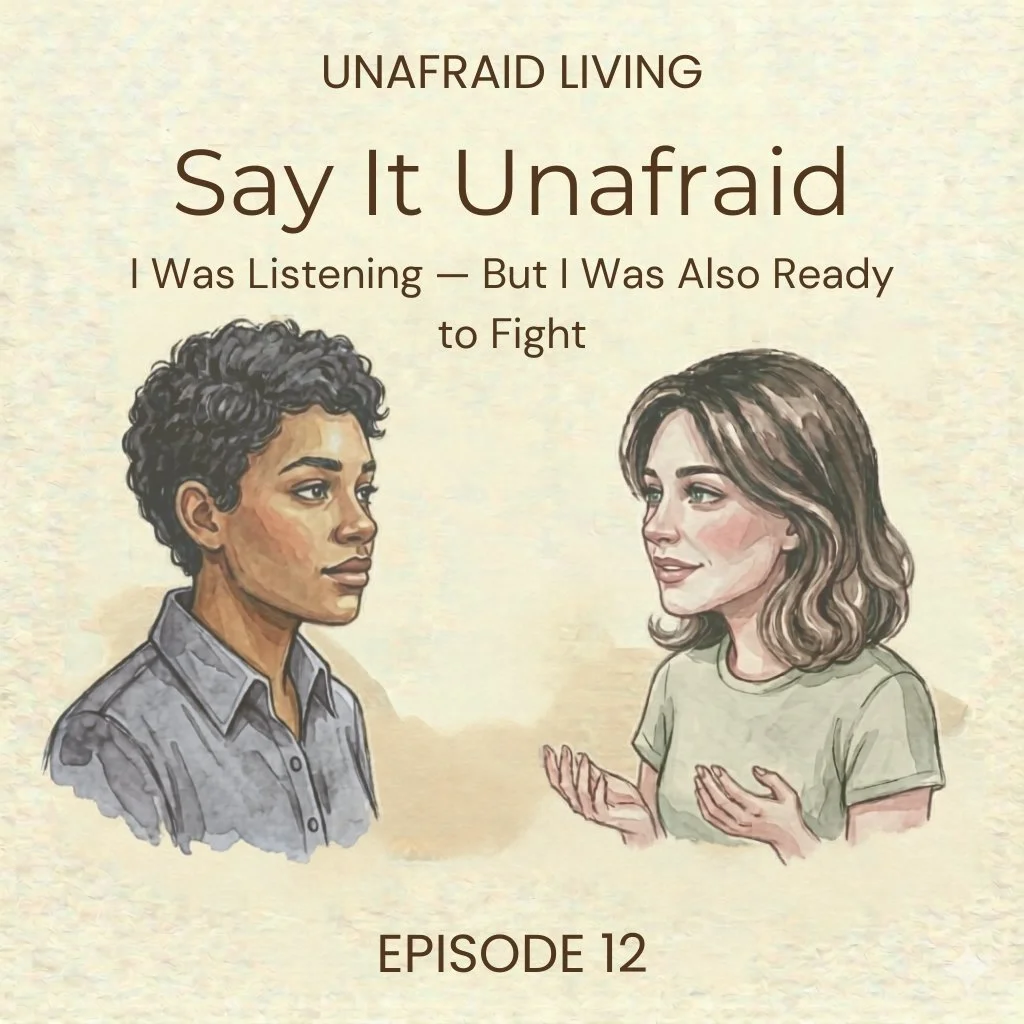
Quick Answer: Defensiveness is your brain's protective response to a perceived threat — even a subtle one like feeling judged. When it kicks in, you stop listening to understand and start listening to protect. Unafraid listening means staying present even when what you're hearing is uncomfortable. It doesn't mean agreeing. It means being willing to understand before you respond. Three practical steps: listen for meaning instead of mistakes, slow your body down physically, and reflect before responding.
Most of us think talking is the hardest part of communication. Knowing what to say, finding the right words, gathering the courage to speak up.
But what if the harder skill — the one that actually determines whether a conversation connects or collapses — is listening?
In Episode 12 of the Unafraid Living podcast, we dig into one of the most underestimated communication skills there is: listening without getting defensive. Not listening to respond. Not listening to fix. Listening to understand.
What Is Defensiveness and Why Does Your Brain Do It?
Why it matters: Understanding that defensiveness is an instantaneous brain response is the first step toward becoming less defensive. It’s a brain pattern that you can change.
Defensiveness is a protective response that shows up when your brain senses a threat — even a subtle one like feeling judged, blamed, or misunderstood. It's your nervous system doing exactly what it was designed to do. The problem is that what kept us safe in survival situations doesn't serve us well in everyday conversations.
The moment defensiveness kicks in, something shifts. You stop listening to understand and start listening to protect. Your internal dialogue changes. Instead of curiosity — tell me more, help me understand — you go to urgency: that's not what I meant, that's unfair, I need to explain myself.
And that urgency? It feels like it's serving you. But it's actually shutting the conversation down. Defensiveness is a reactionary response — it's usually quick, usually feels urgent, and it almost always blocks the connection the conversation was meant to build.
Why Do We Listen to Respond Instead of Listening to Understand?
Why it matters: Recognizing the difference between these two modes of listening is what separates conversations that connect from conversations that escalate.
Your brain doesn't like discomfort. When you hear something that feels personal — criticism, blame, even a misunderstanding — your brain wants to jump out of that discomfort as fast as possible. It wants resolution now. So instead of staying present with what the other person is saying, you start rehearsing your response while they're still talking.
And here's the thing: the person across from you can see it. They can see it in your eyes, in your body language. They feel the disconnect. They know you're not actually with them anymore — you're in your head, building your case.
That disconnect is what turns a conversation into a conflict. Not because the topic was too hard, but because one or both people stopped being present.
What Does Unafraid Listening Actually Look Like?
Why it matters: Unafraid listening is a practice, not a personality trait — which means anyone can learn it.
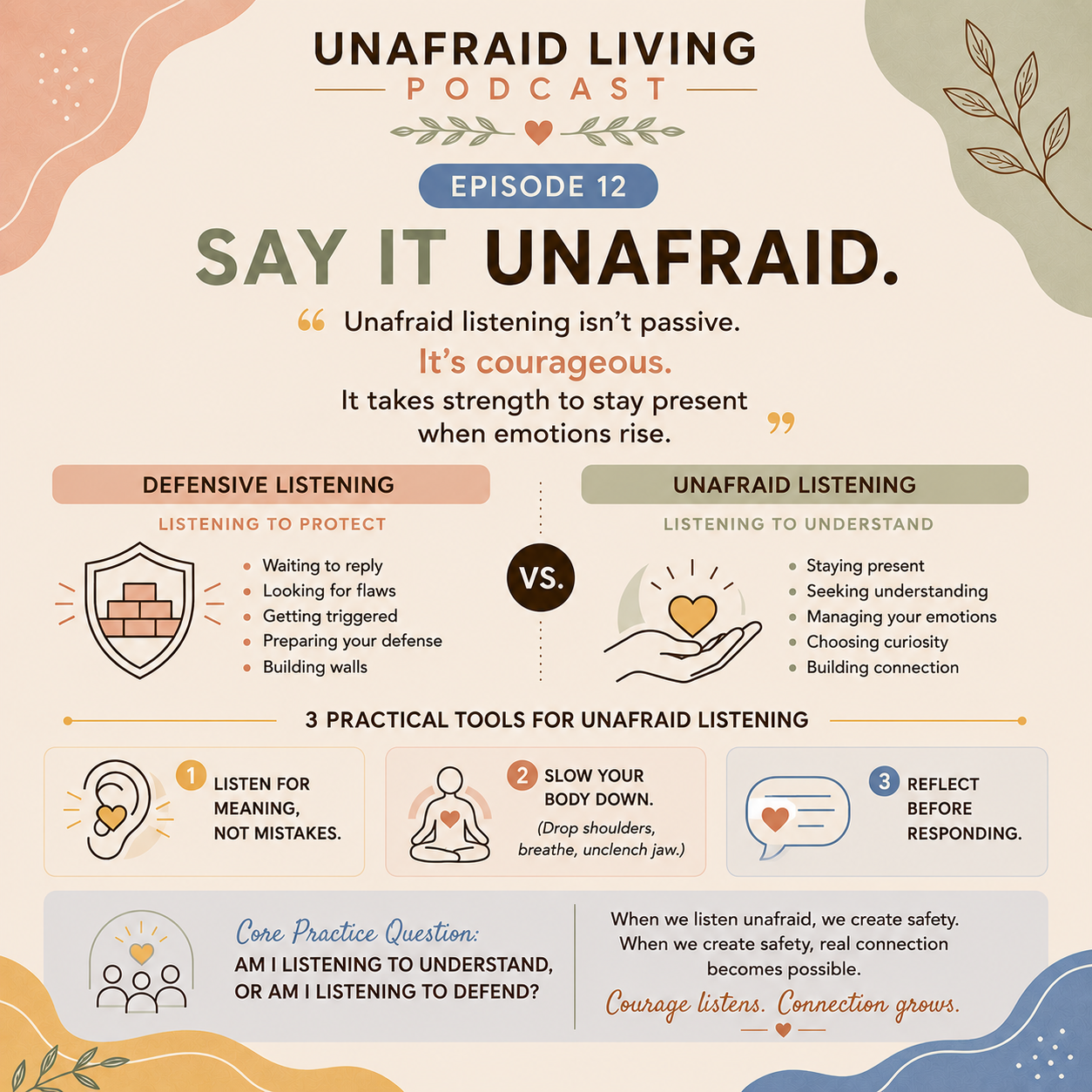
Unafraid listening means staying present even when what you're hearing is uncomfortable. It doesn't mean you agree with the other person. It doesn't mean you make yourself invisible or abandon your own perspective. It means you're willing to understand before you respond.
That distinction matters. This isn't about being passive. It's about being courageous enough to sit in the discomfort of hearing something hard — and choosing understanding over urgency.
Three Steps to Stop Reacting and Start Listening
Why it matters: These three practices give your brain a different path to follow when defensiveness shows up.
1. Listen for Meaning, Not Mistakes
Instead of tracking what's wrong with somebody's words, try listening for what really matters to them right now. Why are they saying this? What are they trying to protect or express? When you shift from analyzing to empathizing, the whole energy of the conversation changes.
2. Slow Your Body Down
Drop your shoulders. Take a breath. Unclench your jaw. This isn't just a relaxation technique — it's a brain regulation strategy. When your body feels like it's under threat, your brain can't stay curious. The physical shift tells your nervous system that you're safe enough to keep listening.
3. Reflect Before Responding
Pause before you speak. It might feel awkward to you, but it usually feels honoring to the other person. They can see you're not just jumping back at them — you're actually thinking about what they said. Try something like "What I'm hearing is..." or "It sounds like this really matters to you." Reflection buys time, builds safety, and builds trust.
How Heart-Focused Breathing Helps You Stay Regulated in Hard Conversations
Why it matters: Calming your nervous system is measurable and proven — it physically changes how your brain processes information.
Heart-focused breathing is a HeartMath protocol that calms your entire emotional system and helps your body's systems get in sync. When you calm your nervous system down, your brain literally changes — and it's measurable. Organizations like NASA, Boeing, and hospital systems use HeartMath protocols because they work. And the beauty of it is that it's simple enough for anyone to practice.
When you feel defensiveness creeping in — that tightness in your chest, the urge to interrupt — that's the moment to pause and breathe. Not just one breath, but several. Heart-focused breathing changes your emotional state and gives your prefrontal cortex a chance to come back online so you can think clearly and respond rationally instead of reactively.
What If You Notice You're Already Being Defensive?
Why it matters: Noticing defensiveness in yourself isn't failure — it's the very definition of mindfulness. And you can pivot in real time.
Defensiveness doesn't have to be a character flaw you beat yourself up about. When you notice it, that's actually a powerful moment. You're being mindful. You're aware. And from that awareness, you can ask yourself a helpful question: What's really going on inside me right now?
Instead of berating yourself, try giving yourself leverage. You might say something out loud like "I'm feeling a little defensive right now — could we slow this down?" or "I want to understand, but I need a moment to settle my thoughts." That's not avoidance. That's unafraid communication in real time.
How Do You Ask Someone to Actually Listen to You?
Why it matters: Knowing how to make gentle, clear requests changes the dynamic of difficult conversations.
If you often feel like people aren't really listening, it's okay to ask for presence. But how you ask matters. Starting with "You never listen to me" or "Could you just listen for once?" puts the other person on the defensive immediately. Instead, try making it a gentle, affirming request.
Something like: "I value your input — if you could hear me before responding, I'd be so grateful." Or: "I'm hurting, and I don't need a solution right now. I just want you to hear my heart." Clear requests help everyone stay regulated — you and them.
Key Takeaway
Unafraid listening isn't passive. It's courageous. It takes strength to stay present when emotions rise. And when we listen without defensiveness, we create safety — for ourselves and for the people we care about. That's where real connection happens. And it's a skill we can practice.
Your Step This Week
In your next conversation — especially one that feels even slightly charged — notice whether you're listening to understand or listening to defend. If you catch yourself rehearsing your response while the other person is still talking, pause. Breathe. Stay curious a little longer. Ask for clarity instead of jumping to conclusions.
Your brain will want to rush. Let it wait.
Frequently Asked Questions
Why do I get so defensive when someone gives me feedback?
Defensiveness is your brain's protective response to a perceived threat. Even well-intentioned feedback can trigger the nervous system if it touches something sensitive — like feeling judged, blamed, or misunderstood. It's not a character flaw. It's a wired-in survival response. The good news is that you can learn to notice it and choose a different path in the moment. Practices like pausing, breathing, and reflecting before responding help your brain shift from protection mode to curiosity.
What's the difference between listening to respond and listening to understand?
When you listen to respond, you're mentally building your case while the other person is still talking. Your focus is on what you want to say next, not on what they're actually communicating. When you listen to understand, you stay present with their words, their tone, and their meaning — even when it's uncomfortable. The shift sounds simple, but it's one of the hardest communication skills to practice consistently.
Is it okay to tell someone I need a minute before I respond?
Absolutely. Asking for a pause isn't avoidance — it's self-awareness. Saying something like "I want to understand, but I need a moment to settle my thoughts" actually builds trust. It tells the other person you care enough to think carefully before you speak, rather than reacting impulsively.
How does heart-focused breathing help during a difficult conversation?
Heart-focused breathing is a HeartMath protocol that calms your nervous system and helps your body's systems get in sync. When your nervous system is regulated, your prefrontal cortex — the part of your brain responsible for rational thought — can function more effectively. That means you're able to think clearly and respond thoughtfully instead of reacting from a place of emotional charge.
How can I ask someone to listen without making them defensive?
The key is framing your request with respect and gentleness. Instead of "You never listen to me," try something like "I value your input — if you could hear me before responding, I'd be so grateful." Or if you're hurting: "I don't need a solution right now. I just want you to hear my heart." Clear, gentle requests help everyone stay regulated and keep the conversation safe.
Ready to Go Deeper?
The UNAFRAID course gives you the neuroscience-backed tools to retrain your brain — from fear and reactivity into resilience, confidence, and peace. Learn how to regulate your nervous system, manage difficult emotions, and communicate with courage.
👉 Start your journey with Fearless Foundations ($97) at unafraidcourse.com
Take The Unafraid Profile — a free 3-minute quiz that reveals how fear and anxiety show up in your brain, plus practical tools to start rewiring the pattern.
Listen to the Full Episode
🎧 Episode 12: How to Stop Being Defensive — The Brain Science of Unafraid Listening
Available wherever you listen to podcasts.
Follow @unafraidliving on Instagram, TikTok, Facebook, and YouTube.
Related Episodes from the Unafraid Connections Series
🔗 Episode 10: Why Communication Breaks Down (And How to Start Fixing It)
🔗 Episode 11: How to Ask Better Questions Without Starting a Fight
More from the Virtue Effect Series:
🔗 The pause-and-pivot method for reducing anxiety (Episode 6)
🔗 Why forgiveness changes your brain (Episode 8)
🔗 What is self-mastery and why does it matter? (Episode 9)