Why Your Questions Start Fights (And How Processing Styles Cause Conflict)
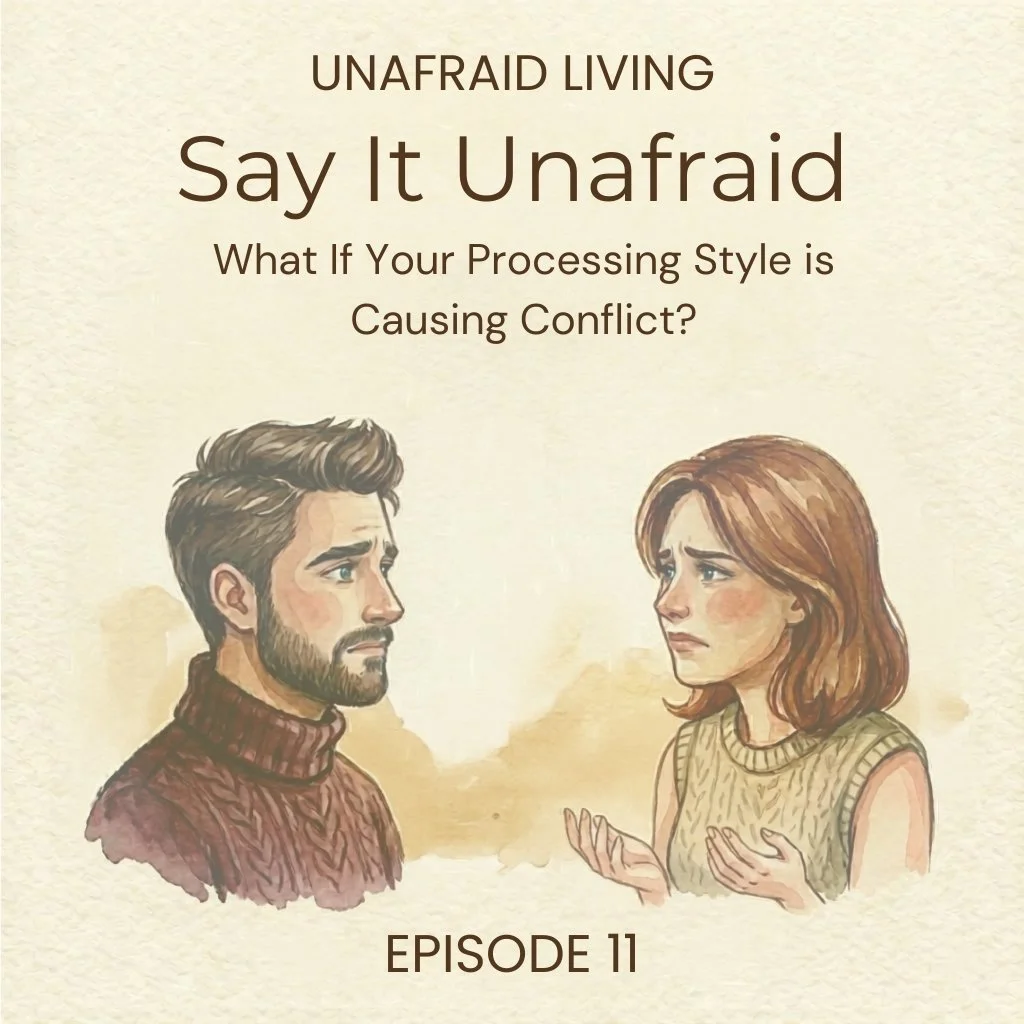
Have you ever asked a completely innocent question — you genuinely just wanted to understand something — and suddenly the other person is defensive, hurt, or shutting down? And you're standing there thinking, What just happened?
You're not bad at communicating. You might just be processing differently.
In Episode 11 of the Unafraid Living podcast — part of the Say It Unafraid series — Kim and I, Coach Suzette, a certified Brain Health professional, break down how different processing styles create conflict, why questions get misunderstood so easily, and what you can do to turn tension into trust.
It's Not Poor Communication — It's Different Processing
Here's the thing most people don't realize: the majority of communication problems aren't about someone being a bad communicator. They happen because two people process information differently and neither one has learned how to adapt.
You might only struggle to communicate with certain people — a partner, a coworker, a parent — while your conversations with everyone else flow just fine. That's a clue. It's not that you can't communicate. It's that your processing styles are clashing.
Internal vs. External Processors (And the Layers Within Each)
You've probably heard of internal and external processors before. But there's more going on beneath the surface than most people realize.
External processors think by talking. But not all of them want the same thing. Some want input — they love to brainstorm, bounce ideas around, and hear your feedback. Others just want to monologue. They're working through their thoughts out loud and they don't want your opinion — at least not yet. They'll ask when they're ready.
People with a high need for affirmation are often external processors. Those small interjections — "right on," "that makes sense," "yeah, exactly" — aren't just polite. They help the person feel secure in their own conclusions.
Internal processors sort things out quietly before they speak. Some need a lot of time. Others are surprisingly quick — which can be frustrating for people who assume that fast conclusions mean shallow thinking. That's not the case. They just think differently.
Neither style is better. They're just different. And when two people with opposite styles try to have a conversation without recognizing that difference, conflict is almost guaranteed.
The Two Stages Most People Miss: Processing and Alignment
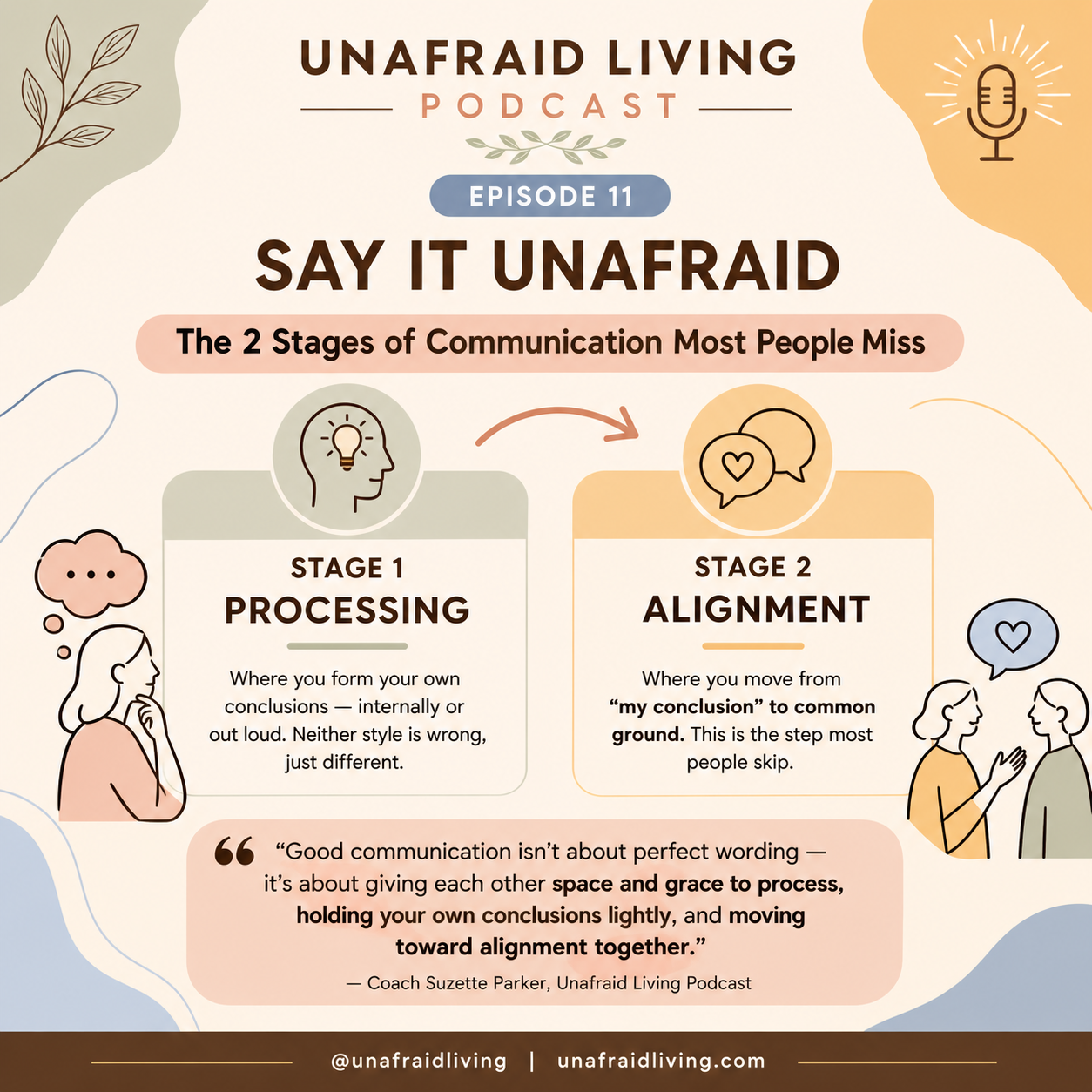
Coach Suzette lays out a framework that changes everything once you see it: communication has stages, and most of us skip through them as if they don’t exist.
Stage 1: Processing. This is where we think through things individually and land on our own conclusions. Even external processors do this — they just do it out loud. Once we reached our conclusion, we all quietly hope that everyone else will land in the same place we did.
Stage 2: Alignment. This is where we go from individual conclusions to common ground. It's the relational part — working together to find a solution both people can live with, even if it's not perfect.
The problem? Most people stop at Stage 1. They reach their conclusion and assume everyone else agrees. And when someone asks a question or pushes back, it doesn't feel like curiosity. It feels like an attack.
If there's no room for alignment, one person ends up controlling the conversation, maybe even the relationship — sometimes without even realizing it.
Why Questions Feel Like Interrogation
This is where things get real. When someone is still in the processing stage, questions can upset their line of thinking. So timing matters. You want to avoid forcing the alignment phase before the other(s) is finished processing.
But the real problem comes when one is attached to their conclusion. A question for them may not land as curious - it may feel like a lack of trust, or pressure to have to rethink their conclusion, which signals the need for a strong defense.
You don't trust me. You think I'm wrong. You're trying to control this.
But most of the time, the person asking isn't trying to tear anything down. They're trying to understand. They're trying to find alignment. But alignment will always be elusive if there is no room for discussion. It may feel like alignment to one party, when the other quietly concedes to avoid a fight.
The challenge is that you can’t always frame a question perfectly. Even thoughtful questions can feel threatening when someone is still processing, emotionally attached to their conclusion, or already feeling defensive.
How a question lands is shaped not only by the words being spoken, but by the emotional state of the person receiving them. You can communicate with care and curiosity, but true alignment still requires both people to maintain a feeling of safety while staying open for discussion.
Naming Your Intention Changes Everything
One of the most practical takeaways from this episode: name your intention before you ask your question.
Instead of jumping straight in, try leading with something like:
"I'm asking because I want to understand, not because I'm upset."
"I want to get clarity so we can both feel comfortable moving forward."
It sounds small. But it can completely change how a question is received. When people know your intention, the question no longer feels like an ambush.
One Question. Then Pause.
Timing, tone, and quantity all matter. Even good questions can overwhelm someone if there are too many, too fast — especially if that person's nervous system is already on edge.
The rule is simple: ask one question, then pause. Let the other person respond without filling the silence with more words. When we keep talking after asking a question, we often convolute what we're really trying to ask, making it harder — not easier — for the other person to respond.
One question. Clear intention. More space. That's how you build trust instead of tension.
When You're the One Feeling Overwhelmed
If you're on the receiving end and the questions feel like too much, it's okay to say something like:
"I need a minute to think about that."
"Can we slow down a bit?"
"Give me a second — I want to answer this well."
That's not avoidance. That's self-awareness. And for the person asking, knowing that you want to think about it — rather than just ignoring them — can actually feel honoring.
Your Step This Week
Before you ask your next question — or before you respond to one — pause and check your intention. Ask yourself: Am I really trying to understand? Am I trying to find alignment? Or am I feeling defensive and just want to egg them on?
Your intentions shape how your words land. Naming your purpose before your question is one of the simplest shifts you can make — and one of the most powerful.
Ready to Go Deeper?
If communication feels harder than it should, you might be dealing with patterns your brain learned a long time ago. The UNAFRAID course gives you practical, science-backed tools to retrain your brain — from fear and reactivity into confidence and connection.
👉 Sign up at unafraidcourse.com
Take The Unafraid Profile — a free 3-minute quiz that reveals how fear and anxiety show up in your brain, plus practical tools to start rewiring the pattern.
Listen to the Full Episode
🎧 Episode 11: Say It Unafraid — Why Your Questions Start Fights
Available wherever you listen to podcasts.
Frequently Asked Questions
What are internal and external processing styles? Internal processors think things through quietly before speaking. External processors think by talking — they work through ideas out loud. Both styles have layers: some external processors want feedback while others just need to talk it out. Some internal processors are quick thinkers while others need more time.
Why do my questions start arguments? Questions can feel like pressure or interrogation when the other person is still in their processing stage. If they haven't finished forming their own conclusions, a question — even a well-meaning one — can feel like you're challenging or controlling them rather than trying to understand. Or it might be that you are communicating with someone who is very to their own conclusions and is not really interested in your thoughts or ideas.
How do I ask better questions in a conversation? Name your intention before your question, ask one question at a time, and then pause to let the other person respond. Leading with something like "I'm asking because I want to understand" usually changes how the question is received.
What is the alignment stage of communication? Alignment is the stage where both people move from their individual conclusions toward common ground. It comes after processing and involves holding your own conclusions lightly while working together toward a solution both people can live with.
How do I tell someone I need more time to think without shutting them down? Say something like "Can we slow down?" or "I need a minute to think about that". Or is the conversation has gotten heated, you might ask for 24 hours. This isn't avoidance — it's self-awareness. Letting the other person know you want to think about their question rather than snapping back or just going silent actually builds trust.