Unafraid Living Podcast Episode 1: How to Retrain Your Brain to Fear Less and Live More
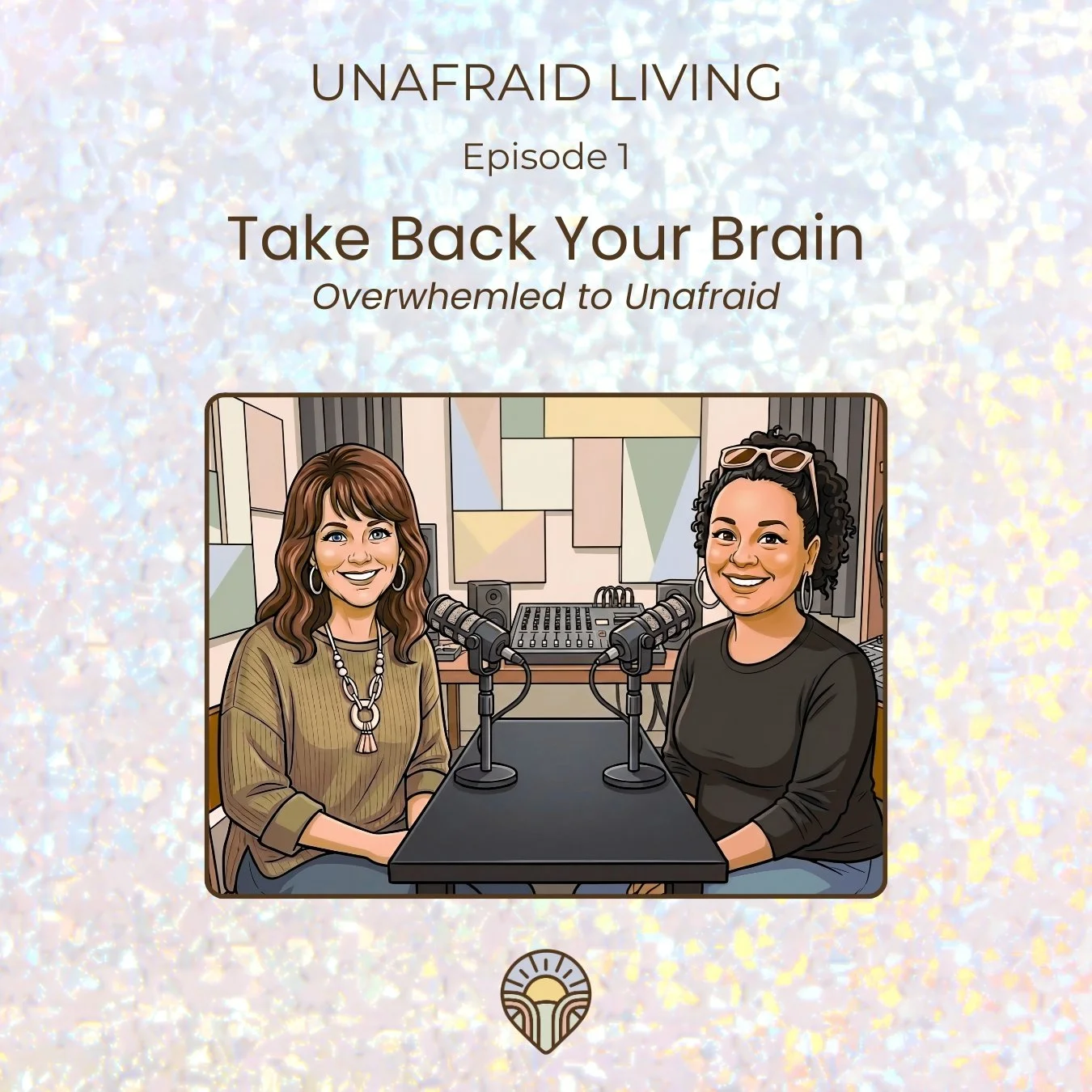
Ready to fear less and live more? Listen to Episode 1 of Unafraid Living on Spotify or your favorite podcast platform.
Quick Answer: Your brain can change — that’s neuroplasticity, and it’s working in one direction or another until the day you die. Brain health isn’t just about memory or focus; it includes emotional regulation, mental energy, and how your thought patterns shape your daily experience. When your brain isn’t healthy, fear, anxiety, and negative thought loops take over. But with targeted lifestyle changes — removing brain toxins, eating and moving for brain health, building safe community, and practicing intentional self-talk — you can retrain your brain to fear less and live more.
If you’ve ever felt stuck in fear, anxiety, or negative thought loops, this episode will show you something hopeful: your brain can change.
In Episode 1 of Unafraid Living, we break down how brain health shapes your emotions, decisions, and resilience—and how you can retrain your brain to fear less and live more.
Welcome to Unafraid Living—where the goal is simple but life-changing: fear less, live more.
In our first episode, Kim and Coach Suzette introduce the heart behind the podcast, why brain health matters so much, and how you can retrain your brain to move out of fear and into resilience.
👉 If you want practical tools like this delivered weekly, be sure to subscribe to Unafraid Living and start retraining your brain one episode at a time.
Who are Kim and Coach Suzette?
Kimberly Mills is your curious co-host, asking the questions you’re probably thinking and helping translate brain science into everyday life.
Coach Suzette Parker is a:
- Board-certified life coach
- Certified brain health professional
- Long-time student of how the brain works and how it really changes
Suzette is passionate about practical brain health—not just knowing the names of brain parts, but using brain-based tools to:
- Quiet fear and anxiety
- Build confidence
- Create a life that feels calmer, freer, and more aligned with what you actually want
She jokes that she’s glad people understand terms like “amygdala,” but the real transformation comes when you know what to do differently in your daily life.
Why Does Brain Health Matters for “Unafraid Living”?
A core theme of this episode is this: you can retrain your brain to move out of anxiety and fear and into resilience by building your mental fitness.
What Is Brain Health, Really?
Suzette explains that brain health isn’t just about:
- Remembering things
- Focusing
- Solving problems
- Making decisions
It’s also about:
- Emotional regulation (how well you manage emotions)
- Neuroplasticity (how your brain changes and adapts)
- Mental energy and motivation
- Protecting your brain physically from damage and toxins
In other words, brain health is both:
- Physical – how your brain is functioning as an organ
- Mental/Emotional – your thought patterns, beliefs, and mindset
- Spiritual – how you experience meaning, connection, and purpose
When your brain isn’t functioning well, you:
- Feel foggy, stuck, or unmotivated
- Struggle to feel joy or satisfaction
- May live in chronic fear, anxiety, or negative thought loops
That’s why brain health is at the center of Unafraid Living. When your brain is healthier, you’re more capable of feeling calm, confident, and free.
Have you heard Suzette’s Story: From Seizures, Mold, and Lyme to Brain Health Advocate?
Suzette didn’t just learn this in a textbook—she lived it.
Her Son’s Seizures and GABA
Early on, her first born son had seizures. They visited a naturopathic neurologist, something she admits she initially thought felt like “voodoo.” But that visit changed everything.
The doctor discovered her son was low in GABA, a calming neurotransmitter. With targeted supplementation:
- His seizures stopped
- His brain calmed
- He was able to “live life unafraid,” as she puts it
That experience opened Suzette’s eyes to how chemistry, nutrition, and the brain all connect.
Discovering Her Own Brain Patterns
Years later, Suzette had a brain scan herself, partly because of her training. The scan revealed:
- Severe ADD patterns in her brain
- Signs of mold exposure in her brain
- Brain patterns linked to negative thought loops
This was surprising because she’d always appeared high functioning—she did well in school and managed life. The doctor explained that she had intuitively developed strategies that compensated for her ADD.
But internally, things didn’t always feel so smooth.
### Brain Fog, Mold, and Late-Stage Lyme
Before she really understood what was going on, Suzette went through years of:
- Daily brain fog
- Feeling like she “could not think clearly”
- Struggling to function the way she knew she could
Tests eventually confirmed:
- Significant mold exposure
- Late-stage Lyme disease, discovered when it was almost in stage four
Suzette went through intense work to heal:
- Supplements
- Detoxing, including essential oils protocols
- Lifestyle changes
Over time, she saw dramatic improvements and now describes her life as “great”—which is not the typical path for many who go that far with Lyme.
This whole journey deepened her compassion and gave her real-life tools she now shares with her clients and listeners.
Training with Dr. Daniel Amen
To formalize her passion for brain health, Suzette went through Dr. Daniel Amen’s professional certification program at Amen University.
- The program was originally open to coaches like her (it’s now limited to medical and mental health professionals).
- It was taught at a high level, with doctors and neuroscientists in the audience.
- Some of it went over her head, she says, but she still got enormous value from it.
After completing the course—about 90 hours of training—she knew: “I have to share this stuff.”
That’s a big part of what Unafraid Living is built on: bringing high-level brain science down to earth in a warm, practical, hopeful way.
Why We Want You to “Fear Less and Live More”
Why would you want to fear less and live more?
Kim’s answer:
- Life is simply better when you’re not ruled by fear.
- Almost everything negative in our lives, when you trace it back, is tied to fear at some level.
- When you learn to control your mind and reduce fear, you:
- Have more fun
- Experience more happiness
- Live “more, more, more”
Suzette adds that fear often shows up in two ways:
1. “I don’t want to do that thing, so I’m afraid and avoid it.”
2. “I do want to do that thing, but I’m too afraid to try.”
It’s that second one—where fear stands between you and what you truly desire—that really robs you of joy. Getting over that hurdle changes your life.
What Are Some Common Misconceptions About Brain Health?
Suzette highlights several big misunderstandings:
1. People Don’t Think About Brain Health (Just Mental Health)
We talk about:
- Stress
- Anxiety
- Depression
But we rarely talk about the brain as an organ and what it needs to function well.
2. Doctors Treat the Brain Without Looking at It
Suzette points out something surprising:
- The brain is the only organ doctors routinely treat without seeing it (through imaging or scans).
- Most people are put on psychiatric medications without ever having a brain scan.
- This leads to a lot of trial and error, and often poor results.
3. People Think the Brain Is “Fixed”
Another misconception:
- Many people believe you’re stuck with the brain you were born with.
- In reality, neuroplasticity means your brain is always changing—one direction or the other—until the day you die.
This is where growth mindset comes in:
- When you believe, “I can grow, I can get better, I can learn new ways, I’m not stuck like this,”
- You’re more likely to take the kinds of actions that actually change your brain.
4. Lifestyle Doesn’t Matter (But It Really Does)
Suzette emphasizes that brain-healthy lifestyle choices are some of the most effective ways to improve brain health. Many people underestimate this.
Practical Lifestyle Changes for a Healthier Brain
So what can you actually do?
Suzette draws heavily from Dr. Amen’s work and her own experience. Some key lifestyle shifts include:
1. Remove or Reduce Brain Toxins
Things that damage the brain include:
- Drugs
- Alcohol (“too much” is harmful; Amen even argues for no alcohol)
- Environmental toxins, like mold
- Highly processed foods and certain additives
She notes that:
- Some food chemicals and dyes have been banned in other countries because of their impact on the brain, especially children’s brains.
- Red dye is one example that was removed for a reason.
2. Eat and Move for Brain Health
The basic health advice you’ve always heard also applies to your brain:
- Eat nutrient-dense, whole foods
- Exercise regularly
- Spend time outside
These habits improve:
- Blood flow
- Inflammation levels
- Mood and motivation
3. Build Healthy Community
Brain health isn’t just solo work. Suzette emphasizes the importance of:
- Meaningful, safe relationships
- Having a trusted circle where you can:
- Speak openly
- Be supported
- Let others “speak into your life”
Connection itself is deeply regulating and healing for the brain.
Did You Know That There Are Tools for Anxiety and Negative Thought Loops?
Kim asks a vulnerable question:
Do you ever struggle with anxiety or negative thinking, even as a coach?
Suzette is honest—she used to struggle a lot more with:
- Recurring negative thought loops
- Waking up with the same heavy thoughts over and over
A brain scan showed issues in her cingulate gyrus, a part of the brain involved in getting “stuck” on thoughts.
What helped her?
1. Supplements (Targeted, Not Random)
Working with professionals, Suzette:
- Started supplements targeted to her brain patterns
- Also uses support for her ADD
She is not suggesting everyone just go take what she takes. Instead, her point is that:
- The right targeted support can make a huge difference.
- Her mornings, mood, and mental clarity improved dramatically.
2. Self-Talk
Suzette also uses intentional self-talk:
- She would often take a shower in the morning specifically to do her self-talk routine.
- This helped her redirect her mind and set a more positive tone for the day.
Her trainer even called this out as:
“One more tool that you do to change your brain.”
Self-talk, repeated over time, becomes:
- A way to rewire your thought patterns
- A real brain-changing tool, not just a “nice idea”
The Unafraid Course: Taking the Work Deeper
If you like what you hear on the podcast but want more hands-on help, Suzette has created The Unafraid Course:
- What it is:
A course designed to help you retrain your brain to move out of fear and into resilience, one small shift at a time.
Learn how to stop negative thought loops before they take over.
- What we offer:
- Practical, simple tools you can actually use in daily life
- Options to work at your own pace
- A private community so you’re not doing this alone
- More affordable than most ongoing therapy sessions
It’s especially helpful if:
- You can’t afford 1:1 coaching right now
- You want structure and guidance, but also flexibility
- You’re serious about changing how fear shows up in your life
You can learn more at: unafraidcourse.com
Stay Connected & Ask Questions
Kim and Suzette really want this podcast to be a conversation, not just a broadcast.
If you:
- Have questions about brain health or fear
- Want them to cover a specific topic in a future episode
- Need clarification on something you heard
You can email Suzette directly at: suzette@unafraidliving.com
And you can follow along on:
- TikTok
- YouTube
Plus, make sure to follow/subscribe to the podcast wherever you listen so you don’t miss upcoming episodes.
Final Encouragement
The heart of Episode 1—and of Unafraid Living as a whole—is this:
- You are not stuck with the brain or the life you have right now.
- Fear doesn’t have to run the show.
- With the right tools, support, and mindset, you can fear less, keep calm, and live more.
Your brain is always listening.
What you do—day by day, choice by choice—can help you start living unafraid.
Key Takeaways
- Your brain can change (neuroplasticity is always at work)
- Fear often shows up as avoidance or hesitation
- Brain health affects your emotions, energy, and clarity
- Small daily habits can retrain your brain over time
Want to Go Deeper?
The Fearless Foundations course gives you the brain-based tools to break free from fear, anxiety, and negative thought loops — at your own pace. 6 modules. 30 lessons. $97.
Start now at unafraidcourse.com
Not Sure Where to Start?
Take The Unafraid Profile — a free 3-minute quiz that reveals how fear and anxiety show up in your brain, plus practical tools to start rewiring the pattern.
Take the Quiz → unafraidliving.com/quiz
FAQ Section
What is brain health? Brain health includes how well your brain functions physically (blood flow, nutrition, toxin exposure), mentally and emotionally (thought patterns, emotional regulation, motivation), and spiritually (meaning, connection, purpose). When your brain is healthier, you’re more capable of feeling calm, confident, and free.
Can you really retrain your brain? Yes. Neuroplasticity means your brain is always changing — one direction or the other — until the day you die. When you believe you can grow, learn, and change, you’re more likely to take the kinds of actions that physically rewire your brain toward resilience and confidence.
What lifestyle changes improve brain health? Key changes include removing brain toxins (excess alcohol, processed foods, environmental toxins like mold), eating nutrient-dense whole foods, exercising regularly, spending time outside, and building meaningful, safe relationships. These habits improve blood flow, reduce inflammation, and support mood and motivation.
How does self-talk change your brain? Intentional self-talk redirects negative thought loops by creating new neural pathways. Repeated over time, it rewires your default patterns from fear and anxiety toward calm and confidence. Coach Suzette describes self-talk as a real brain-changing tool, not just a nice idea.
What is the Unafraid Living podcast about? Unafraid Living blends brain science, personal stories, and practical tools to help young adults understand their brain, steady their heart, and move forward with confidence. Hosted by Coach Suzette Parker, an Amen-trained Brain Health Professional, and Kim Mills.